Ravensmoor
A recommendation to commit £136,500,000 of Fund II equity to the first 48 MW of a consented data centre campus.
14 October 2026
The recommendation
Approve the commitment, subject to three conditions, each of which must be satisfied before the first pound of equity is drawn.
Approve with conditions
Commit £136,500,000. Draw nothing until the grid agreement, the anchor lease and the fixed-price contract are all executed.
Defer twelve months
The connection queue position is dated and non-transferable. Deferral loses it and re-enters the queue behind an estimated 41 applications.
Decline
Land is under option to 31 January 2027. The option premium of £1,150,000 is non-refundable and would be written off in full.
The downside case does not clear the hurdle. Under the correlated downside set out on page 31, gross return falls to 18.0 per cent and 2.06 times, against a 20.0 per cent hurdle. The Committee is being asked to accept a two-point shortfall in that case as the price of a base case at 27.0 per cent and 2.86 times. Page 32 sets out which single driver is doing the damage.
the three conditions
| 01 | An executed connection agreement with an energisation date no later than 31 March 2030, backed by the distribution operator's standard liquidated damages. |
| 02 | A signed anchor lease over not less than 24,000 kW of IT load, at or above £1,275 per kW per year, with a term of fifteen years and no break before year ten. |
| 03 | A fixed-price design and build contract for both halls, with delay damages at 0.4 per cent of contract sum per week, capped at 12 per cent. |
Paper IC/26/019
On 12 March 2026 the Committee approved £4,100,000 of pre-development spend, including the option premium. £3,260,000 has been drawn against it.
Three things
Planning granted and unchallenged. A connection offer received and priced. The anchor tenant moved from an approach to negotiated heads of terms.
First drawdown
The Committee sees this again in January 2027, with the three conditions evidenced rather than described.
fund context
| Fund II committed capital | £820,000,000 | Deployed or committed to date | £471,000,000 |
| This commitment | £136,500,000 | Share of the fund | 16.6% |
| Single-asset concentration limit | 20.0% | Headroom once committed | £27,500,000 |
How this paper is ordered
Sections three to five are the six things that stand between the Committee and the base case. They appear largest first, measured by what each puts at risk.
| pages | section | what it settles | gross exposure |
|---|---|---|---|
| 01–05 | The decision | The ask, the conditions and the ledger | – |
| 06–10 | 01 The asset | The site, the consent and what gets built | – |
| 11–17 | 02 The return | Sources, uses, revenue, exit and the assumptions under them | – |
| 18–21 | 03 E1 Lease-up and demand | The campus opening without a signed tenant | £96,500,000 |
| 22–24 | 04 E2 Grid connection | Energisation arriving after the halls are ready | £74,200,000 |
| 25–29 | 05 E3–E6 The remaining four | Construction, exit yield, power price, consent conditions | £141,400,000 |
| 30–34 | 06 The decision restated | The downside case, the conditions, the recommendation | – |
| Gross exposure, six drivers taken independently | £312,100,000 | ||
on the number in the right-hand column
Gross exposure is the equity value lost if that single driver reaches its adverse case and nothing else moves. The six are set out that way because it is the only presentation in which they can be compared.
They cannot be added. Page 31 models them together, where the partial offsets between them bring the combined figure well below the sum in this table.
papers taken as read
Technical due diligence, Ardwell Rowe, 2 September 2026
Connection offer and queue position, 19 August 2026
Planning permission and conditions schedule, 11 June 2026
Market and demand study, Calderfield Research, August 2026
Cost plan stage 3, Merrow Vale, 26 August 2026
how the exposure figures are built
Each driver is run to its adverse case on its own, with every other input held at base. Equity value at exit is recomputed and the difference is the gross exposure. Mitigations are then applied one at a time and what the model still loses is the residual.
The method is crude in one respect: it takes no account of correlation between the drivers. Page 31 runs the six together and reports a combined figure well below the sum.
prepared and reviewed
| Prepared | Platform team |
| Model reviewed | Ardwell Rowe, 4 Sep 2026 |
| Legal | Halloway Grange |
| Recommended | Chief Investment Officer |
What the money buys, and when it leaves
Equity funds the first fourteen months in full. Senior debt draws only once the anchor lease is signed, which places the covenant test ahead of the largest tranche.
| capital drawn | 2027 | 2028 | 2029 | 2030 | total |
|---|---|---|---|---|---|
| Fund II equity | £48,600,000 | £87,900,000 | – | – | £136,500,000 |
| Senior construction debt | – | £33,500,000 | £142,800,000 | £51,300,000 | £227,600,000 |
| Land vendor deferred consideration | – | – | – | £15,200,000 | £15,200,000 |
| Total capital | £48,600,000 | £121,400,000 | £142,800,000 | £66,500,000 | £379,300,000 |
the resolution sought
| 01 | Commit £136,500,000 of Fund II equity to Ravensmoor Phase One. |
| 02 | Authorise exercise of the land option before 31 January 2027. |
| 03 | Authorise a senior facility of up to £227,600,000 on the indicative terms at page 12. |
| 04 | Delegate execution of the three conditions to the Chief Investment Officer, reporting to the Committee at each drawdown. |
gearing and headroom
The facility is interest-only through construction with a cash sweep from stabilisation. Interest and fees during construction of £29,800,000 are capitalised inside the figures above.
what each drawdown is released against
| drawdown | amount | released against |
|---|---|---|
| Jan 2027 | £48,600,000 | Option exercised, all three conditions evidenced, contractor appointed |
| Jan 2028 | £87,900,000 | Substation works commenced and the connection agreement unamended |
| from Q2 2028 | £227,600,000 | Senior facility drawn monthly against certified value, to the 60 per cent cap |
The exposure ledger
Six drivers, each measured as equity value at risk in its own adverse case. The bar shows gross exposure; the solid portion is what survives every mitigation currently available.
| driver | gross · residual | gross | residual | |
|---|---|---|---|---|
| E1 | Lease-up and demand | £96,500,000 | £22,700,000 | |
| E2 | Grid connection and energisation | £74,200,000 | £31,400,000 | |
| E3 | Construction cost and programme | £47,300,000 | £11,900,000 | |
| E4 | Exit yield | £43,600,000 | £43,600,000 | |
| E5 | Power price and the PPA | £31,600,000 | £7,800,000 | |
| E6 | Water, cooling and consent conditions | £18,900,000 | £5,400,000 | |
| Six drivers, taken independently | £312,100,000 | £122,800,000 |
the order changes once mitigation is applied
| by gross | by residual |
|---|---|
| E1 96.5 | E4 Exit yield 43.6 |
| E2 74.2 | E2 Grid connection 31.4 |
| E3 47.3 | E1 Lease-up 22.7 |
| E4 43.6 | E3 Construction 11.9 |
| E5 31.6 | E5 Power price 7.8 |
| E6 18.9 | E6 Consent 5.4 |
The largest gross exposure is the one the platform can do most about. A signed anchor lease removes three quarters of E1 before any capital is committed, which is why it appears as a condition rather than as a mitigation.
E4 moves the other way. The exit yield cannot be contracted, hedged or covenanted, so its residual equals its gross and it becomes the largest single item the Committee is being asked to carry. Page 27 sets it out on its own.
the adverse case behind each figure
| driver | run in the model as | |
|---|---|---|
| E1 | Lease-up and demand | The second and third commitments arrive 24 months late, at 6 per cent below the underwritten rate |
| E2 | Grid connection | Energisation slips four quarters to Q3 2030, with both halls complete and unpowered |
| E3 | Construction | Build inflation at 7.2 per cent against 4.1 assumed, plus a 20-week programme overrun |
| E4 | Exit yield | The exit yield widens 50 basis points to 7.25 per cent at unchanged income |
| E5 | Power price | The PPA goes unsigned and merchant power runs 40 per cent above base across the non-recoverable share |
| E6 | Consent conditions | The discharge consent tightens, adding dry cooling capacity and two points of PUE |
The asset
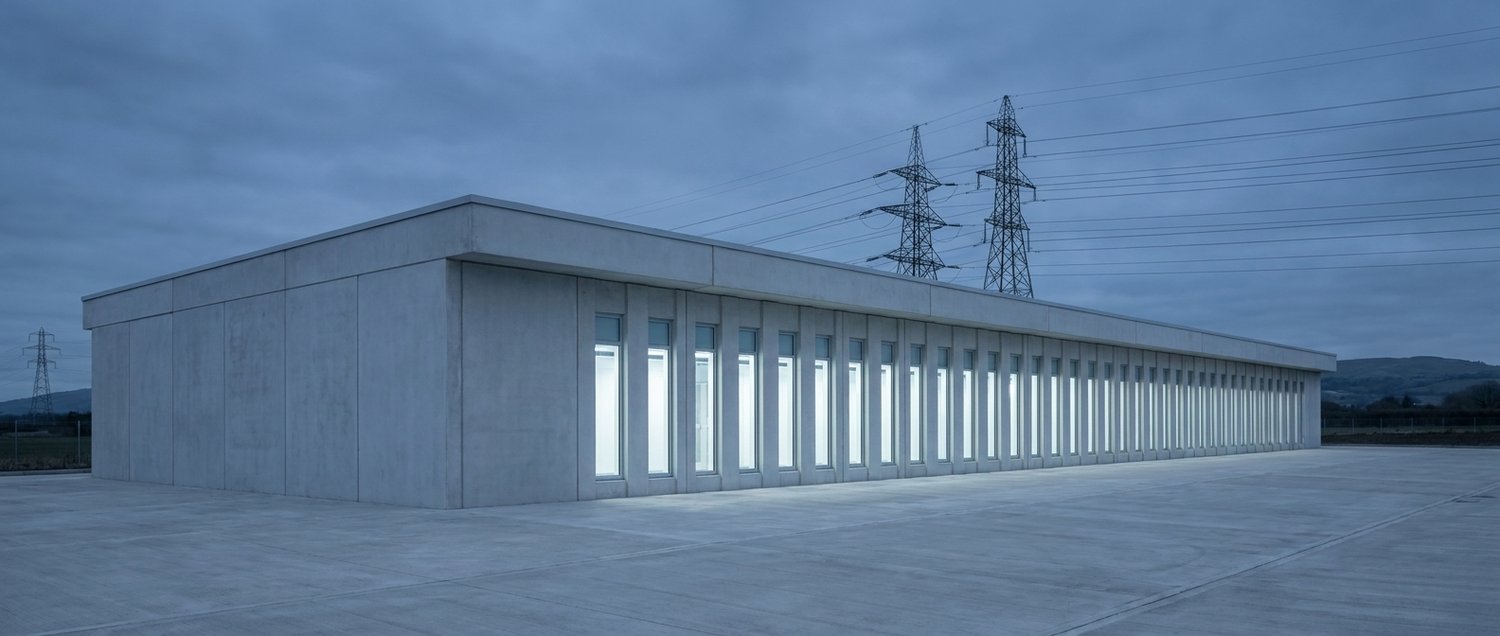
A consented 120 MW campus on a decommissioned paper mill, bought for one reason above all others: it already holds a live 132 kV connection.

Why Ravensmoor and not the other two
Three sites were carried to offer stage. Ravensmoor was the only one where the connection already exists and is energised.
| site | consentable | live capacity | earliest energisation | land, per acre |
|---|---|---|---|---|
| Ravensmoor selected | 120 MW | 38 MVA | Q3 2029 | £286,000 |
| Halstow Reach | 90 MW | nil | Q1 2033 | £214,000 |
| Culvery Fen | 160 MW | nil | Q4 2034 | £131,000 |
Culvery Fen is the better site on every measure except the one that decides the investment. Its queue position offers energisation in late 2034, by which point the fund is in realisation. Land price follows the same logic in reverse: Ravensmoor carries a 118 per cent premium per acre over Culvery Fen, and the premium is the connection.
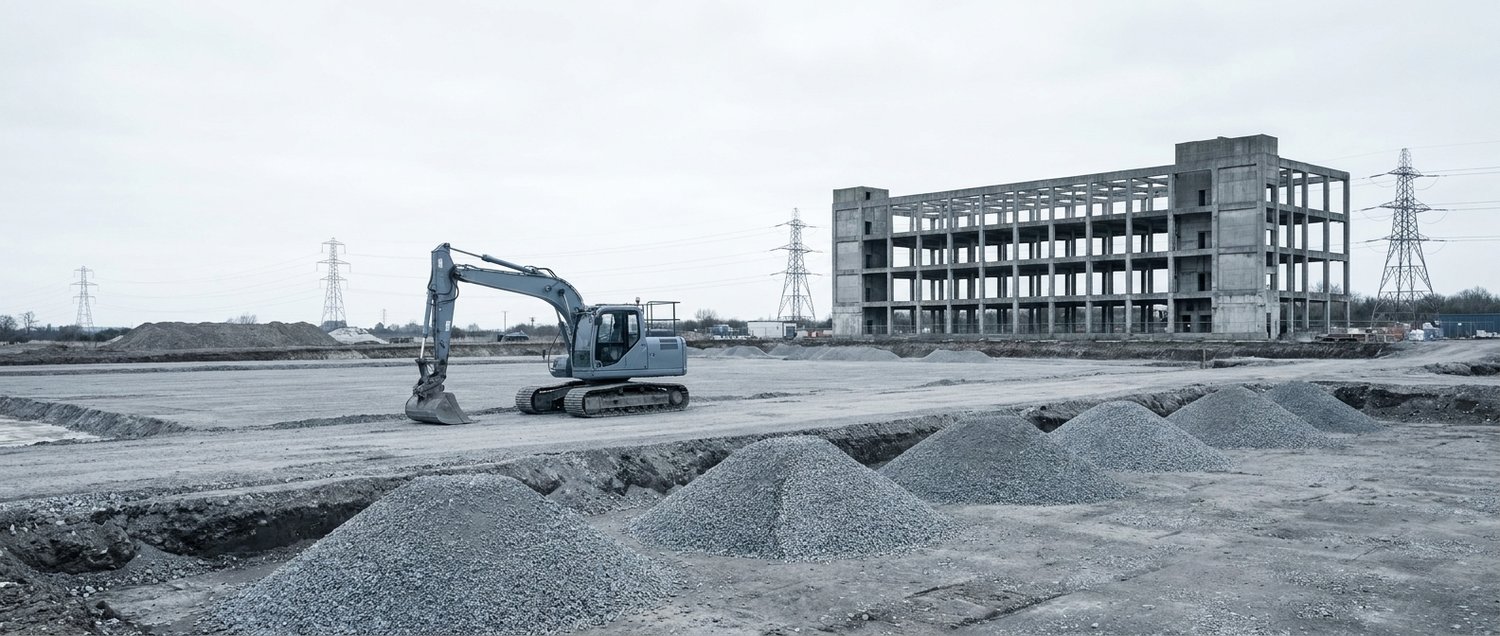
The mill closed in 2019 and the site has been held by the receiver since. The retained structure at the northern edge is a reinforced concrete frame in sound condition, surveyed by Ardwell Rowe, and is demolished under Phase One enabling works.
what the option costs to hold
Exclusivity runs to 31 January 2027 against a premium of £1,150,000, paid and non-refundable. A single three-month extension is available at the same figure.
Exercise triggers the land payment of £24,000,000, of which £15,200,000 is deferred to practical completion of Hall B.
site constraints
| Flood zone | 1 |
| Made ground, to | 3.2 m |
| Remediation, priced in the cost plan | £4,900,000 |
| Statutory designations on site | none |
| Archaeology | discharged |
the terms of the sale
The receiver sells on a fixed timetable with no conditionality beyond planning, which is now satisfied. There is no overage and no clawback. The deferred £15,200,000 is secured by a legal charge released on practical completion of Hall B.
What the permission allows, and what it forbids
Full permission was granted on 11 June 2026 under reference 26/00418/FUL. The judicial review period expired unchallenged on 23 July 2026.
permitted
| Three data centre buildings | 120 MW |
| Phase One, buildings A and B | 48 MW |
| Primary substation and switchroom | 180 MVA |
| Standby generation, diesel, enclosed | 14 sets |
| Gross internal area, Phase One | 18,400 m² |
| Building height to parapet | 14.6 m |
conditions that bind the design
| Cooling | closed loop only |
| Mains water for cooling | prohibited |
| Noise at the nearest receptor, 340 m | 42 dB LAeq |
| Construction HGV movements | 34 per day |
| Biodiversity net gain | 12% |
| External lighting curfew | 2300 to 0600 |
The water condition is the expensive one. Evaporative cooling is prohibited outright, which removes roughly four points of annualised efficiency and adds £9,400,000 to the mechanical package. It is priced into the cost plan at page 12 and it is the reason design PUE reads 1.22 rather than the 1.16 a comparable campus with adiabatic cooling would target. E6 at page 29 covers what happens if the discharge consent is tightened further.
outstanding pre-commencement conditions
| C4 | Surface water drainage strategy | submitted |
| C7 | Construction environmental management plan | submitted |
| C11 | Archaeological written scheme | discharged |
| C14 | External materials and finishes | due Q1 2027 |
| C19 | Landscape and biodiversity plan | due Q1 2027 |
the section 106 obligations
Highway works at the Mereside junction, £2,400,000, triggered on commencement.
Local employment and skills plan, with a 24 per cent local labour target through construction.
Heat offtake easement reserved to the district network, exercisable at the operator's cost.
planning history
| Screening opinion issued | Aug 2025 |
| Environmental statement submitted | Jan 2026 |
| Resolution to grant | 14 May 2026 |
| Section 106 completed | 9 Jun 2026 |
| Decision notice issued | 11 Jun 2026 |
| Judicial review period expired | 23 Jul 2026 |
what the permission forbids
| Gas or hydrogen generation for prime power |
| Abstraction from the Dene for cooling |
| Phase Three before the Mereside works complete |
| Any load above 120 MW without a fresh application |
| Generator testing outside 0900 to 1700 on weekdays |
Two halls, 24 MW each, liquid-ready at handover
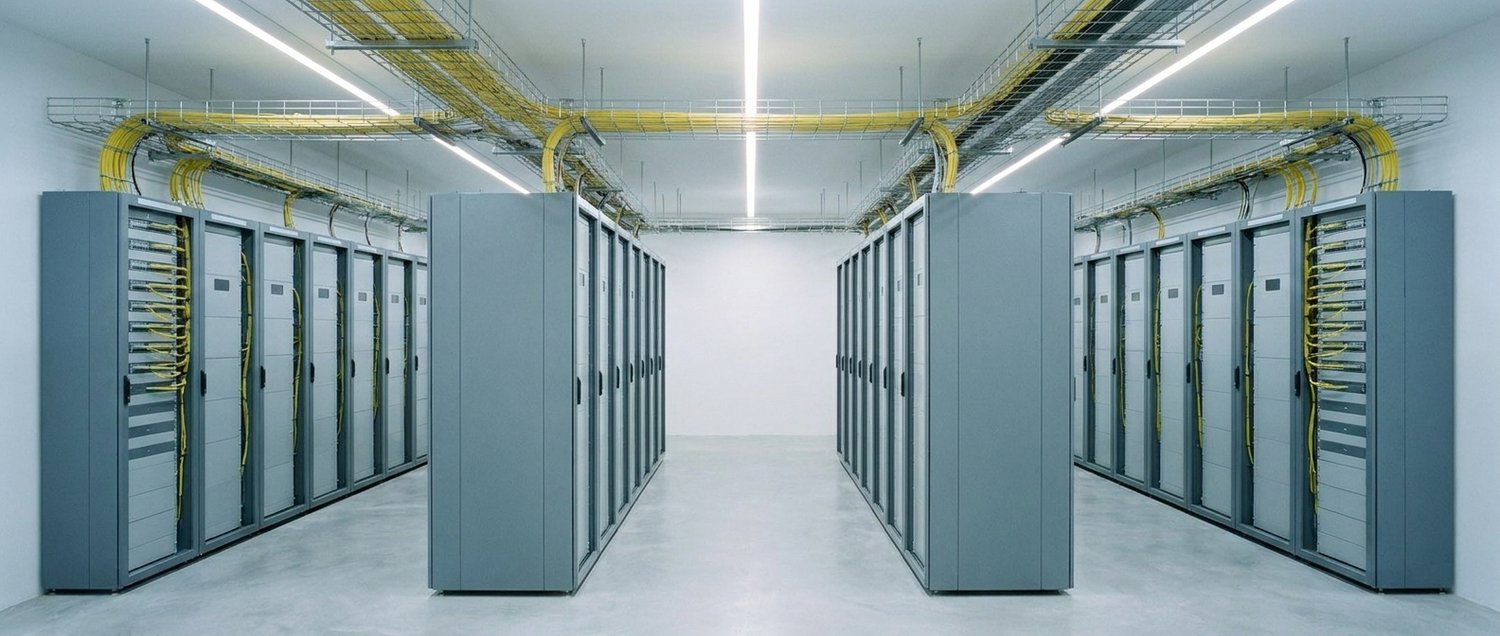
Phase One is specified for training and inference workloads from the outset. Forty per cent of white space is plumbed for direct liquid cooling on day one.
specification
| IT load, per hall | 24 MW |
| White space, two halls | 8,600 m² |
| Design density, air cooled | 30 kW / rack |
| Design density, liquid cooled | 130 kW / rack |
| Liquid-ready white space at handover | 40% |
| Electrical and mechanical resilience | N+1 |
| Design PUE, annualised | 1.22 |
| Standby generation | 14 × 3.0 MVA |
| Fuel autonomy at full load | 72 hours |
| UPS autonomy, lithium-ion | 5 minutes |
programme
| Land option exercised | Jan 2027 |
| Connection agreement executed | Q2 2027 |
| Demolition and enabling works | Q2 2027 |
| Construction start, both halls | Q3 2027 |
| Substation energised | Q3 2029 |
| Hall A handover | Q4 2029 |
| Hall B handover | Q2 2030 |
| Stabilised occupancy | Q4 2031 |
| Assumed realisation | Q4 2032 |
| Programme float to energisation | 14 weeks |
Fourteen weeks of float sits between practical completion of Hall A and the contracted energisation date. That float is the whole of E2 at page 22: it absorbs a slip of one quarter and nothing beyond it.
procurement
| Contract form | design and build |
| Pricing | fixed, two-stage |
| Delay damages, per week | 0.4% of sum |
| Damages cap | 12% |
commissioning
| Integrated systems testing | levels 1 to 5 |
| Load bank testing at full IT load | 14 days |
| Black building test | 2 cycles |
| Tenant witness period | 21 days |
The campus
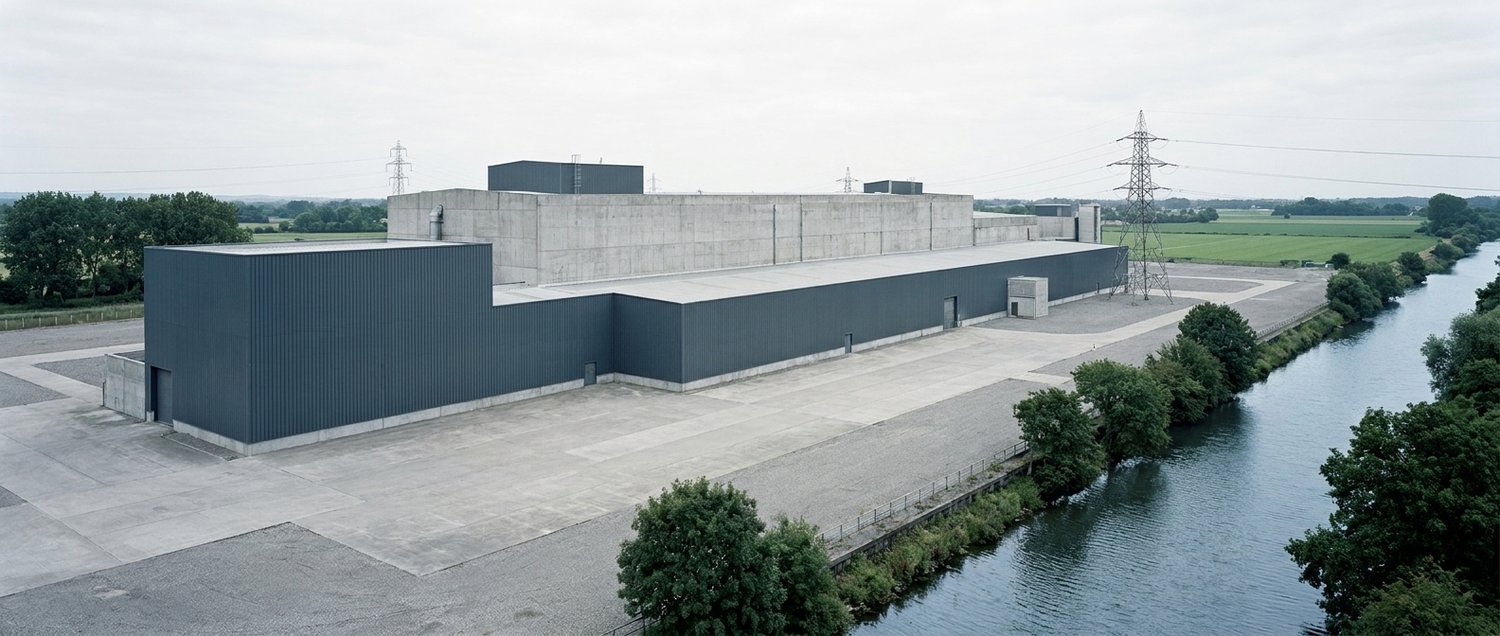
Phase One occupies the western third. The grid infrastructure, marked in the accent, is the part that is already there.
| building | gross internal | white space | load | handover |
|---|---|---|---|---|
| Hall A | 9,200 m² | 4,300 m² | 24 MW | Q4 2029 |
| Hall B | 9,200 m² | 4,300 m² | 24 MW | Q2 2030 |
| Primary substation and switchroom | 1,850 m² | – | 180 MVA | Q3 2029 |
| Generator yard, 14 enclosures | 2,400 m² | – | 42 MVA | Q3 2029 |
| Phase One | 18,400 m² | 8,600 m² | 48 MW |
phase one footprint
Two halls and the plant yard occupy 11.2 of the 34 hectares. The generator yard sits south of the halls, at the distance the acoustic condition requires from the northern receptor.
the connection
The retained 132 kV route crosses the northern edge and already terminates on site at 38 MVA. The new primary substation takes that termination to 180 MVA, enough for all three phases.
phases two and three
Both are consented and both are excluded from this paper. Neither carries capital, and neither is valued in the exit at page 16.
The return
£379,300,000 of capital against £42,700,000 of stabilised income. The rest of this section is where each of those two figures comes from.
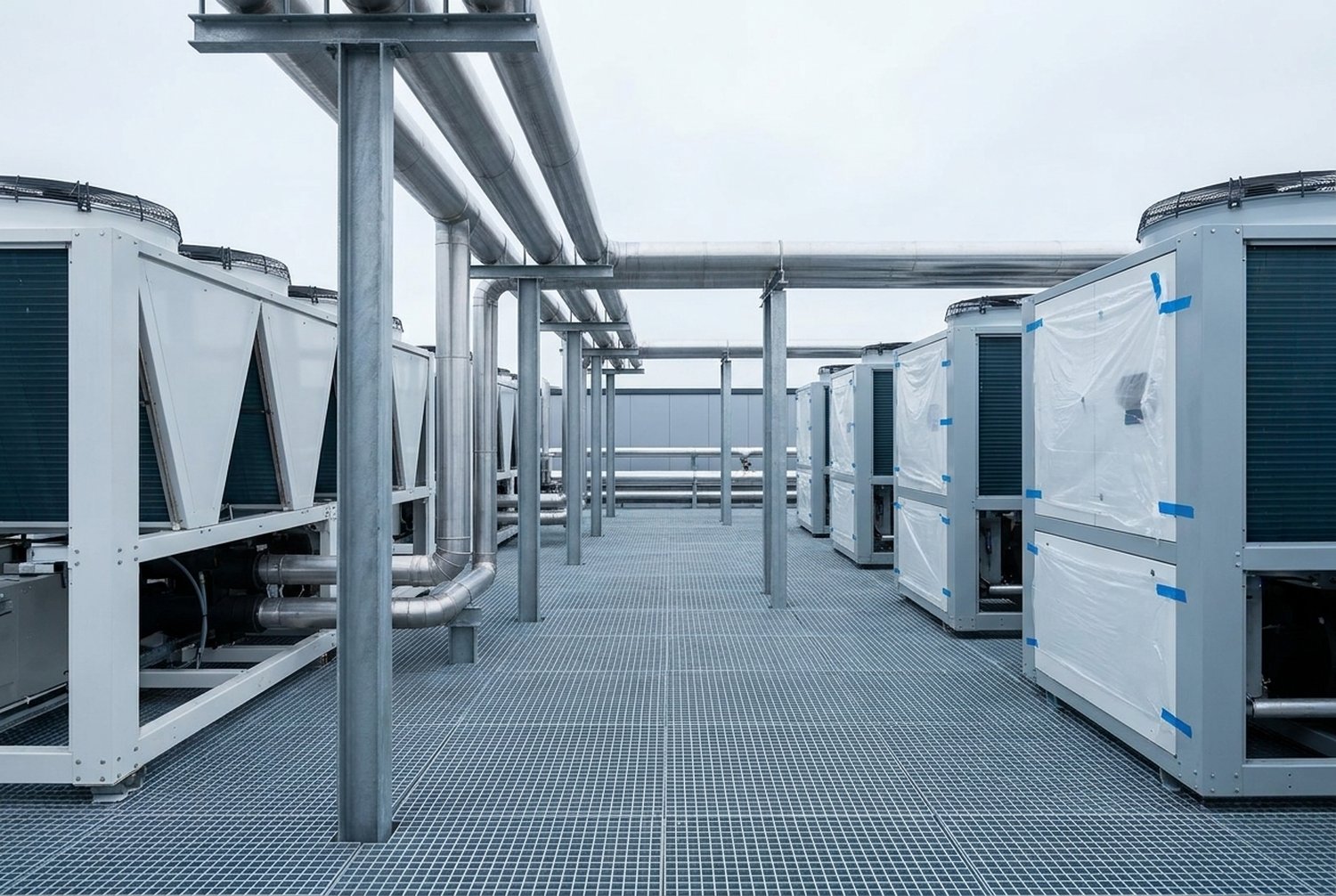
Sources and uses
£7.90m per MW of IT load, inclusive of land, grid and the cooling premium the consent imposes.
uses
| Land and site acquisition | £24,000,000 |
| Grid connection and primary substation | £57,200,000 |
| Civils, shell and core | £88,600,000 |
| Mechanical and electrical fit-out | £136,900,000 |
| Fibre, security and campus infrastructure | £11,700,000 |
| Development management, design, consents | £16,400,000 |
| Contingency, 5.0% of construction | £14,700,000 |
| Interest and fees during construction | £29,800,000 |
| Total uses | £379,300,000 |
sources
| Fund II equity | £136,500,000 |
| Senior construction facility | £227,600,000 |
| Land vendor deferred consideration | £15,200,000 |
| Total sources | £379,300,000 |
indicative senior terms
| Facility | £227,600,000 |
| Margin over SONIA, construction | 265 bps |
| Margin over SONIA, from stabilisation | 205 bps |
| Arrangement fee | 110 bps |
| Loan to cost cap | 60% |
| Debt service cover, from stabilisation | 1.45× |
where this sits against the comparable set
| recent uk development | £m per MW |
|---|---|
| Slough corridor, 2025 completion | 9.40 |
| North West campus, 2026 completion | 8.15 |
| East Midlands, under construction | 7.60 |
| Ravensmoor Phase One | 7.90 |
Ravensmoor sits mid-range. It carries a land premium the East Midlands scheme avoids and saves the grid reinforcement cost that pushes the Slough figure to 9.40, because the 132 kV route is already on site.
The cost plan is stage 3, prepared by Merrow Vale and market-tested against two contractors. It is priced to a Q3 2027 start with 4.1 per cent annual inflation to practical completion. E3 at page 26 sets out what happens if either assumption moves.
cost plan movement, stage 2 to stage 3
| Stage 2 estimate, February 2026 | £352,900,000 |
| Closed-loop cooling, condition C9 | +£9,400,000 |
| Grid connection, offer now priced | +£7,100,000 |
| Liquid-cooling readiness, 40% of white space | +£11,600,000 |
| Value engineering, shell and core | −£6,300,000 |
| Inflation to a Q3 2027 start | +£4,600,000 |
| Stage 3 estimate, August 2026 | £379,300,000 |
platform fees
| Development management fee | 1.75% of cost |
| Asset management fee, from stabilisation | 0.65% of GAV |
| Disposal fee | 0.40% |
| Promote above a 20% project return | 20% |
The first three sit inside the figures on this page and inside the operating cost at page 14. The promote sits outside both and is charged on realisation.
What a kilowatt earns
Rent is charged on committed IT load whether or not it is drawn. Power is recharged at cost with no margin, so the platform carries no price risk on the pass-through.
the rate against the market
| wholesale colocation, £ per kw per year | 2026 |
|---|---|
| Slough corridor, prime | 1,410 |
| East Midlands | 1,240 |
| North West | 1,190 |
| Ravensmoor, underwritten | 1,275 |
The underwriting sits 3 per cent above the East Midlands comparable, justified by liquid-cooling readiness at handover, which none of the three comparables offer. Calderfield Research puts the premium for liquid-ready capacity at 4 to 9 per cent. The underwriting takes the bottom of that range.
the lease-up assumed in the base case
| commitment | load | from | rent |
|---|---|---|---|
| Anchor lease, condition 02 | 24,000 kW | Q4 2029 | £30,600,000 |
| Second commitment | 12,000 kW | Q4 2030 | £15,300,000 |
| Third commitment | 12,000 kW | Q4 2031 | £15,300,000 |
| Stabilised | 48,000 kW | Q4 2031 | £61,200,000 |
Indexation is RPI with a 2 per cent floor and a 4 per cent cap, reviewed annually. The base case runs indexation at the floor throughout, which is the conservative end and understates income if inflation runs above 2 per cent.
Two of the three commitments are unidentified. The anchor is in advanced negotiation and is a condition of this approval. The second and third commitments have no counterparty and no letter of intent behind them. They represent 24,000 kW and £30,600,000 of annual rent, and they are the whole of E1 at page 18.
the power pass-through
| IT load at full commitment | 48.0 MW |
| Design PUE, annualised | 1.22 |
| Total facility load | 58.6 MW |
| Assumed average utilisation | 97% |
| Annual consumption at stabilisation | 498,000 MWh |
| Recharge basis | at cost |
| Platform margin on power | nil |
what the platform still carries
The pass-through covers metered tenant consumption. It leaves three things with the platform: common plant, the gap between contracted and actual PUE, and everything drawn before a hall is let.
That non-recoverable share runs at 11 per cent of consumption once stabilised and at 34 per cent through a slow lease-up. E5 at page 28 prices it.
What the rent has to carry
Thirty per cent of gross rent is spent before anything reaches the fund. Business rates are the largest single line and the least controllable.
£18,500,000
£42,700,000
| operating cost, at stabilisation | share of the stack | annual | £ / kW |
|---|---|---|---|
| Business rates | £6,900,000 | 144 | |
| Facilities operations and staffing | £4,180,000 | 87 | |
| Planned maintenance and spares | £3,940,000 | 82 | |
| Asset and platform management | £2,300,000 | 48 | |
| Insurance | £1,180,000 | 25 | |
| Total operating cost | £18,500,000 | 385 |
the rates position
Rates are assessed on the contractor's basis for a purpose-built data centre and have been set by Merrow Vale against three comparable assessments in the same billing authority. The figure carries no assumed relief and no appeal saving.
A successful appeal on the plant and machinery element would reduce the line by around £900,000 a year. It is excluded from the base case and it is excluded from the downside.
what sits outside this table
Power. It is recharged at cost and appears in neither rent nor operating cost, except for the non-recoverable share priced under E5 at page 28.
Tenant fit-out, tenant power distribution below the busway, and everything inside the cabinet.
operating cost against the same comparable set
| stabilised wholesale colocation | rent, £ / kW | opex, £ / kW | ratio |
|---|---|---|---|
| Slough corridor, prime | 1,410 | 412 | 29.2% |
| East Midlands | 1,240 | 371 | 29.9% |
| North West | 1,190 | 398 | 33.4% |
| Ravensmoor, underwritten | 1,275 | 385 | 30.2% |
The base case, year by year
Capital goes out for four years before income starts. The crossing point is 2030, and everything the exposures do is to move that date.
| £ | 2027 | 2028 | 2029 | 2030 | 2031 | 2032 |
|---|---|---|---|---|---|---|
| Capital drawn | 48,600,000 | 121,400,000 | 142,800,000 | 66,500,000 | – | – |
| Committed IT load, kW | – | – | 24,000 | 36,000 | 48,000 | 48,000 |
| Net operating income | – | – | 6,400,000 | 24,900,000 | 38,200,000 | 42,700,000 |
Income in 2029 is one quarter of the anchor lease. The 2030 figure carries the anchor for a full year and the second commitment for one quarter. Stabilisation is reached in the final quarter of 2031, and 2032 is shown at the run rate the exit is capitalised on.
the equity cash flow behind the headline return
| to and from the fund | 2027 | 2028 | 2029 to 2031 | 2032 |
|---|---|---|---|---|
| Equity drawn | (48,600,000) | (87,900,000) | – | – |
| Distributions | – | – | – | 389,800,000 |
| Net to the fund | (48,600,000) | (87,900,000) | – | 389,800,000 |
Income between 2029 and 2031 services the facility and feeds the cash sweep, so nothing reaches the fund before realisation. The return is one terminal receipt against two staged draws: 2.86 times and 27.0 per cent over six years.
A reader checking the arithmetic should note that the multiple and the annual return disagree with each other on any single-draw assumption. The equity goes out across two years, which is what lifts the annual figure above the sixth root of the multiple.
From asset value to equity proceeds
One terminal receipt in the fourth quarter of 2032. Everything between the asset value and the fund is contractual and known today.
the exit as modelled
| Route | stabilised asset sale |
| Assumed date | Q4 2032 |
| Income capitalised | £42,700,000 |
| Exit yield | 6.75% |
| Gross exit value | £632,600,000 |
| Senior debt outstanding | £227,600,000 |
| Deferred land consideration | £15,200,000 |
| Equity proceeds, gross | £389,800,000 |
the yield against recent trades
| stabilised uk data centre | mw | date | yield |
|---|---|---|---|
| Slough campus, fully let | 42 | Mar 2026 | 5.85% |
| Midlands campus, 90% let | 30 | Nov 2025 | 6.40% |
| Regional, single tenant | 18 | Jul 2025 | 6.60% |
| Ravensmoor, assumed | 48 | Q4 2032 | 6.75% |
The assumption sits 15 basis points wide of the widest trade in the set and 90 wide of the tightest. It carries no allowance for yield compression over the hold, and none for the two consented phases the purchaser would acquire the option on.
Phases Two and Three are valued at nil. Both are consented, both sit inside the 180 MVA connection, and a purchaser would price them. The base case gives them no value, which understates the exit by an amount the platform has deliberately left unquantified. E4 at page 27 is where the exit assumption is tested in the other direction.
What has to be true
Every material input, where it comes from, and which of the six exposures tests it. An input with no exposure against it is one nobody has stressed.
| assumption | base case | source | tested by |
|---|---|---|---|
| Contracted rent | £1,275 / kW | Calderfield Research, August 2026, against three regional comparables | E1 |
| Anchor commitment | 24,000 kW | Heads of terms in negotiation, condition 02 of this approval | E1 |
| Full commitment reached | Q4 2031 | Platform assumption, benchmarked to two regional lease-up curves | E1 |
| Energisation date | Q3 2029 | Connection offer dated 19 August 2026, unaccepted | E2 |
| Construction cost | £379,300,000 | Merrow Vale stage 3 cost plan, market-tested against two contractors | E3 |
| Build inflation to completion | 4.1% a year | Merrow Vale forecast, October 2026 | E3 |
| Programme to Hall A handover | 27 months | Contractor stage 2 programme, 14 weeks of float retained | E3 |
| Exit yield | 6.75% | Three stabilised trades between July 2025 and March 2026 | E4 |
| Exit date | Q4 2032 | Fund II realisation window | E4 |
| Non-recoverable power share | 11% | Ardwell Rowe technical due diligence, 2 September 2026 | E5 |
| PPA covering the non-recoverable share | signed 2028 | Platform assumption, two counterparties approached | E5 |
| Design PUE, annualised | 1.22 | Ardwell Rowe, modelled against the closed-loop condition | E6 |
| Business rates | £6,900,000 | Merrow Vale, three comparable assessments in the same authority | none |
| Senior margin, construction | 265 bps | Two indicative term sheets, both unexpired | none |
Two inputs carry no exposure against them. Business rates are a fixed assessment with a known appeal route and a downside that is small relative to the six. The senior margin is held by two indicative term sheets, and a movement of 50 basis points costs £3,900,000 over the life of the facility.
The rent assumption is the one doing the most work. It sets the income, and the income sets the exit value at a 14.8 times multiple, so a 6 per cent movement in rent moves the exit by roughly £54,000,000 before any change in the yield.
what the model does not include
Value for Phases Two and Three.
Any rates appeal saving.
Yield compression over the hold.
Indexation above the 2 per cent floor.
Heat offtake revenue from the district network easement.
Lease-up
and demand
Half the campus has a counterparty. The other half has a market study, and the market study is the single largest number in this paper.
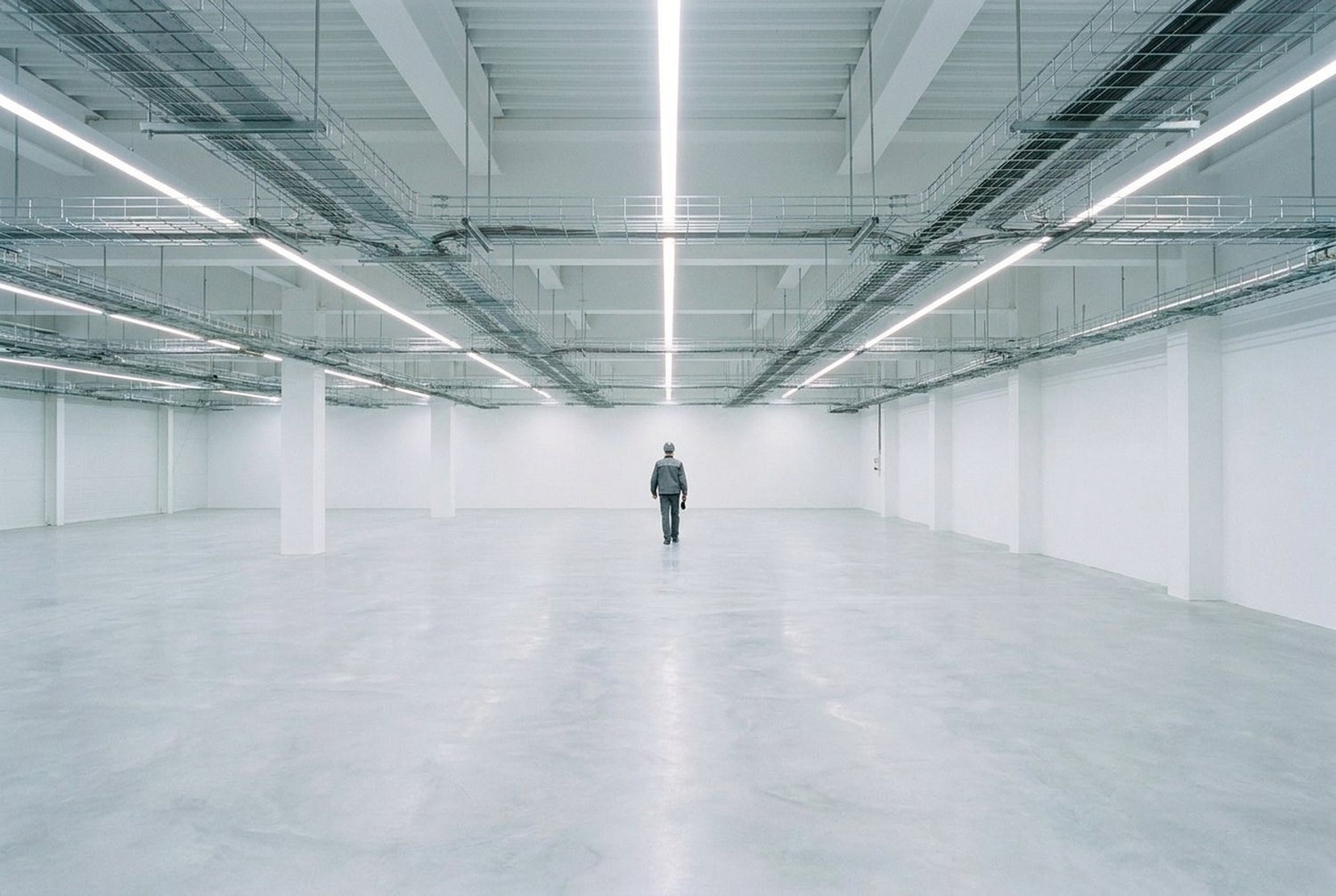
Consent is abundant. Connections are scarce.
There are 640 MW of consented schemes within 120 km of Ravensmoor. Of those, 180 MW hold a connection date before 2031, and Ravensmoor is 48 of them.
uk wholesale colocation take-up
| year | take-up | vacancy | rent growth |
|---|---|---|---|
| 2023 | 186 MW | 7.4% | 4.1% |
| 2024 | 241 MW | 5.9% | 6.8% |
| 2025 | 318 MW | 4.2% | 9.2% |
| 2026, forecast | 392 MW | 3.1% | 7.5% |
Calderfield attributes three quarters of the 2025 and 2026 growth to training and inference workloads. That is the demand Ravensmoor is specified for and it is the demand with the shortest history behind it.
counterparties in dialogue
| counterparty | load | stage |
|---|---|---|
| A hyperscale, US | 24,000 kW | heads of terms |
| B AI platform, EU | 12,000 kW | technical review |
| C financial services | 6,000 kW | first meeting |
| Total in dialogue | 42,000 kW |
Every counterparty currently in dialogue, converting in full, leaves 6,000 kW of the campus unlet. Only counterparty A is at heads of terms, and only A is a condition of this approval.
The demand case rests on a forecast with three years of history. Wholesale take-up more than doubled between 2023 and the 2026 forecast, and the underwriting assumes the regional market absorbs a further 24,000 kW between 2030 and 2031. If the workloads driving that growth consolidate onto a smaller number of very large campuses, a 48 MW regional asset is on the wrong side of it. That scenario is what the 24-month delay at page 20 represents.
the 640 MW, by energisation date
| consented schemes within 120 km | mw | status |
|---|---|---|
| Energised, or energising before 2029 | 74 | live |
| 2029 to 2030 | 106 | agreement |
| 2031 to 2033 | 192 | offer held |
| After 2033, or queue position only | 268 | unpriced |
| Total consented | 640 |
what actually competes in 2030
Only the 106 MW holding an agreed connection for 2029 or 2030 chases the same tenants in the same window. Ravensmoor is 48 of that 106, and the anchor lease removes 24 of its own 48 from the market before any equity is drawn.
The 192 MW holding an offer is the risk running the other way. An offer converts, and a scheme that looked five years out arrives in three. Calderfield puts historic conversion from offer to agreement at 38 per cent within two years.
the underwriting
24,000 kW absorbed between 2030 and 2031, against regional take-up running at 60 to 80 MW a year.
the concentration
One counterparty holds half the campus for fifteen years. Its covenant is investment grade and its parent guarantee is a condition of the lease.
the alternative
A single 48,000 kW lease to counterparty A was explored and declined by them. It would have removed E1 outright at a rent 8 per cent lower.
What an empty hall costs
Delay alone is survivable. Delay at a lower rent is what takes the return below the hurdle, because the rent sets the exit value at 14.8 times.
| second and third commitments | equity value lost | equity proceeds | gross irr | lost |
|---|---|---|---|---|
| On time, at the underwritten rate | £389,800,000 | 27.0% | – | |
| Six months late | £372,100,000 | 25.7% | £17,700,000 | |
| Twelve months late | £355,600,000 | 24.4% | £34,200,000 | |
| Eighteen months late | £340,200,000 | 23.2% | £49,600,000 | |
| Twenty-four months late | £325,900,000 | 22.0% | £63,900,000 | |
| Twenty-four months late, 6% below rate | £293,300,000 | 19.1% | £96,500,000 |
The last row is E1 as it appears in the ledger. It combines the two things that move together in a soft market: tenants arrive later and they arrive with more negotiating room. Taken apart, the delay costs £63,900,000 and the rate concession costs £32,600,000.
Every row above the last still clears the 20 per cent hurdle. A pure timing problem, however severe, does not break this investment. A timing problem that resets the rent does.
the covenant test
The senior facility requires 1.45 times debt service cover from stabilisation. At twenty-four months late, cover reaches 1.31 times in 2031 and cures in 2032.
A cure requires an equity injection of £14,600,000, which Fund II would fund from the concentration headroom at page 2. It is not modelled in the figures above.
The bottom row still returns 19.1 per cent. That is a shortfall of nine tenths of a point against the hurdle, on the single worst case for the largest exposure in the paper. E1 is large because the sums involved are large. It is survivable on its own, and page 31 is where it stops being on its own.
committed load through the hold
In the delayed case the campus reaches realisation at 36,000 kW committed. The exit is then capitalised on two thirds of the income, which is where most of the £96,500,000 comes from. The remaining hall lets in 2033, to a purchaser rather than to the fund.
Three mitigations, and what is left
Three quarters of E1 comes off before any equity is committed, because the first mitigation is a condition of this approval rather than a plan.
| mitigation | share of the exposure removed | removes |
|---|---|---|
| Anchor lease as a condition precedent condition 02, page 33 |
£46,300,000 | |
| Phased Hall B fit-out separable package, D&B contract |
£19,800,000 | |
| Omission right at Hall B slab exercisable to Q2 2028 |
£7,700,000 | |
| Residual exposure | £22,700,000 |
how the anchor lease works
No equity is drawn until 24,000 kW is signed at or above £1,275 per kW, on a fifteen-year term with an investment grade parent guarantee. Half the campus is therefore let before the land option is exercised.
how the phasing works
Hall B mechanical and electrical fit-out is £46,000,000 and sits as a separable package, released on the second commitment. Slow demand leaves it undrawn, which converts a write-down into deferred capital.
how the omission works
The contract carries a right to omit the Hall B superstructure for a capped payment of £4,200,000, exercisable to the second quarter of 2028. It ends the campus at 24 MW and it ends E1 with it.
what the residual actually is
A campus that opens with the anchor lease alone, a Hall B shell standing unfitted, and no second commitment by the realisation date. The exit then capitalises 24,000 kW of income plus a powered shell, and the purchaser prices the shell at replacement cost rather than at a yield.
That outcome costs £22,700,000 of equity value and returns 24.7 per cent, which still clears the hurdle. E1 is the largest number in the ledger and the one the platform has the most control over.
what would remove the residual entirely
A second signed commitment before the Hall B fit-out is released. The platform has two counterparties in dialogue and neither is at heads of terms.
The Committee is asked to note that the platform has proposed no condition covering the second commitment, because a condition nobody can satisfy would stop the investment rather than protect it.
when each mitigation is available, and when it expires
| mitigation | from | expires | what it costs to hold |
|---|---|---|---|
| Anchor lease as a condition | now | first drawdown | Rent 4 per cent below the quote for an open-market 24,000 kW letting |
| Phased Hall B fit-out | Q3 2027 | Q4 2028 | £1,100,000 of contract premium for the separable package |
| Omission right at Hall B slab | Q3 2027 | Q2 2028 | £1,900,000 carried in the contract sum, and £4,200,000 on exercise |
Two of the three expire before the campus opens, so each is used on a forecast rather than on a fact.
Grid
connection
The reason this site was chosen is also the reason it carries the second largest exposure in the paper. Fourteen weeks of float stand between a finished building and a powered one.
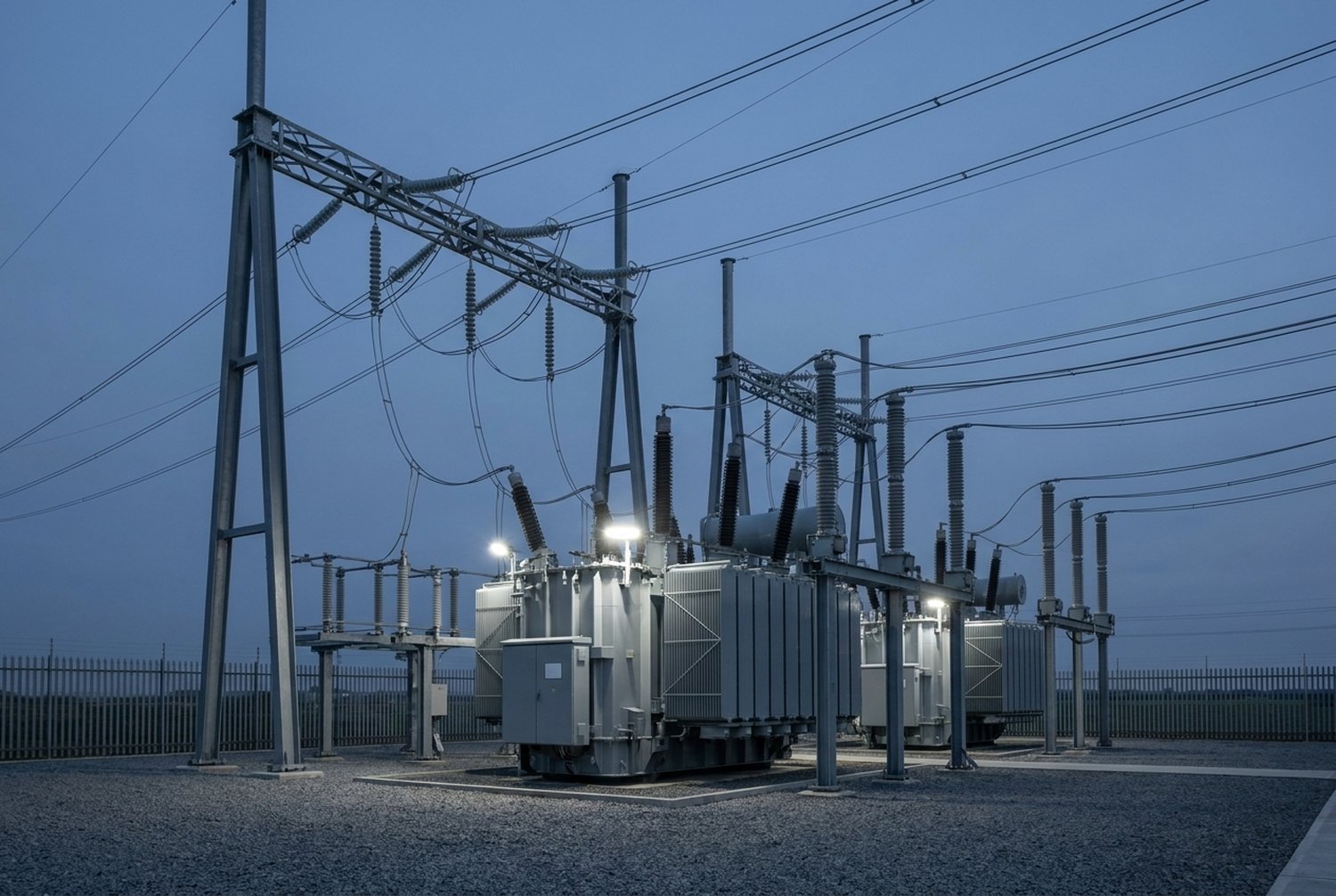
What is held today, and what has to be built
A live 38 MVA termination is an asset almost no competing site has. It is also 21 per cent of what Phase One needs.
the two programmes, and the float between them
the connection offer
| Offer dated | 19 Aug 2026 |
| Valid until | 28 Feb 2027 |
| Capacity offered | 180 MVA |
| Energisation | Q3 2029 |
| Connection charge | £57,200,000 |
| Securities on acceptance | £11,400,000 |
| Liquidated damages for late energisation | £42,000 / week |
what happens if the offer lapses
The offer is site-specific and non-transferable. Allowing it to expire on 28 February 2027 returns Ravensmoor to the connections queue behind an estimated 41 applications, with a re-offered date the operator indicates as 2033 or later.
Acceptance therefore has to happen before the land option expires on 31 January 2027, which is why the connection agreement is condition 01 rather than a milestone. Accepting it commits £11,400,000 of securities, refundable only on energisation.
the connection works
| New 132/33 kV primary substation | 180 MVA |
| Grid transformers | 3 × 60 MVA |
| 132 kV switchgear bays | 4 |
| Cable route to the existing termination | 1.4 km |
| Upstream reinforcement required | none |
| Delivery | contestable |
where the operator's date is credible
No upstream reinforcement is needed, which removes the commonest cause of slippage: this connection waits behind no transmission project. The contestable works are delivered by an independent provider under the platform's own programme.
Outside the platform's control is the operator's switchgear outage window, scheduled annually and moved twice in three years at this substation group. A missed window costs a year.
The float is fourteen weeks and the historic slip in this substation group is twenty-six. Two of the operator's last five connections here energised a quarter late. The base case assumes Ravensmoor is one of the three that did not, and page 24 is what that assumption is worth if it turns out to be wrong.
What slippage costs, and what survives it
A quarter is free. Beyond that, every quarter costs roughly £25,000,000 of equity value, because a finished and unpowered building earns nothing and still carries debt.
| energisation | equity value lost | equity proceeds | gross irr | lost |
|---|---|---|---|---|
| Q3 2029, as offered | £389,800,000 | 27.0% | – | |
| One quarter late, inside the float | £389,800,000 | 27.0% | – | |
| Two quarters late | £365,000,000 | 25.2% | £24,800,000 | |
| Three quarters late | £340,900,000 | 23.2% | £48,900,000 | |
| Four quarters late | £315,600,000 | 21.1% | £74,200,000 |
| mitigation | share of the exposure removed | recovers |
|---|---|---|
| Liquidated damages £42,000 a week under the connection agreement |
£12,600,000 | |
| Temporary generation 12 MW to Hall A, cost £8,900,000 |
£18,400,000 | |
| Matching the Hall B fit-out to the date the same separable package as E1 |
£11,800,000 | |
| Residual exposure | £31,400,000 |
Temporary generation is the mitigation the Committee should look at hardest. It energises a quarter of Hall A on diesel for up to nine months, at £8,900,000 of unbudgeted cost, and the consent permits it only under the standby condition rather than for prime power. It requires a temporary variation, and the authority has granted one to a comparable scheme.
Liquidated damages recover £12,600,000 against a four-quarter slip. They are capped at £2,200,000 in any twelve-month period, so the recovery is spread and its present value is lower than the headline.
the residual, stated plainly
£31,400,000, and a return of 24.7 per cent. The residual is larger than E1's because the platform is exposed to a third party's programme with a weekly damages figure that covers roughly a sixth of the loss.
Condition 01 fixes the contractual energisation date at 31 March 2030, which is two quarters beyond the offered date and inside the residual above.
The remaining
four
Construction, exit yield, power and consent. One of the four cannot be mitigated at all, and it is the reason this section is worth reading before the decision.
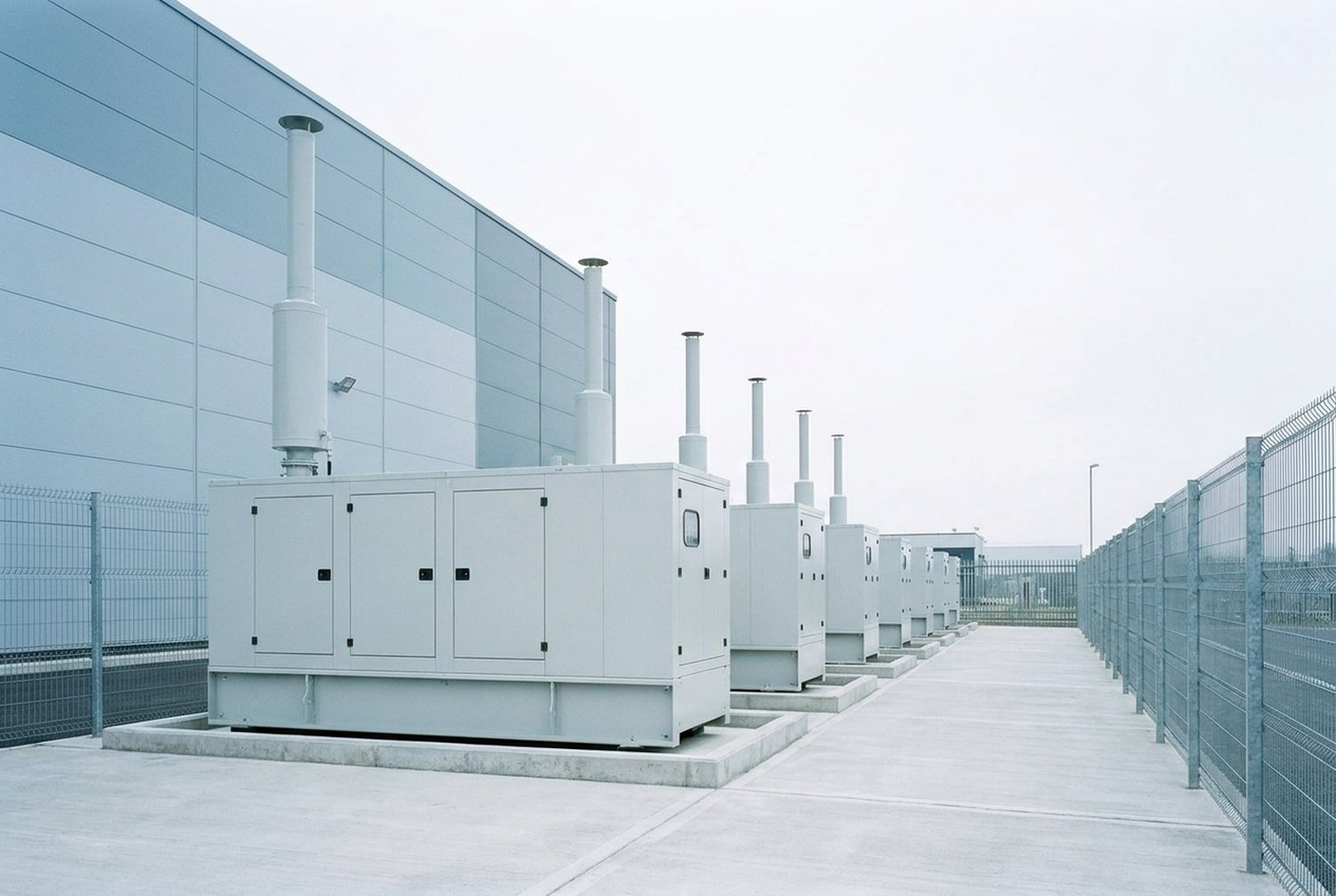
E3 Construction cost and programme
A fixed-price contract moves most of this exposure to the contractor. What it cannot move is the twenty weeks of income a late building never earns.
| scenario | extra capital | equity proceeds | gross irr | lost |
|---|---|---|---|---|
| Cost plan holds, programme holds | – | £389,800,000 | 27.0% | – |
| Build inflation at 5.6% | £13,700,000 | £376,100,000 | 26.0% | £13,700,000 |
| Build inflation at 7.2% | £27,900,000 | £361,900,000 | 24.9% | £27,900,000 |
| Inflation at 7.2% and 20 weeks late | £27,900,000 | £342,500,000 | 23.4% | £47,300,000 |
| mitigation | share of the exposure removed | recovers |
|---|---|---|
| Fixed-price design and build two-stage, priced before commencement |
£23,500,000 | |
| Delay damages 0.4% of contract sum a week, capped at 12% |
£11,400,000 | |
| Contingency £14,700,000, 5.0% of construction |
£500,000 | |
| Residual exposure | £11,900,000 |
Contingency recovers almost nothing in this scenario, which is the point worth noticing. At 7.2 per cent inflation the £14,700,000 is consumed by the first eighteen months of the programme, and it is gone before the overrun begins. Contingency covers a scope problem. It does not cover a market one.
The fixed price is the real protection, and it is only real once signed. Condition 03 holds the first equity drawdown until the contract is executed at a sum inside the cost plan.
the residual, stated plainly
£11,900,000, and a return of 26.2 per cent. The smallest residual of the six, because a contractor with a fixed price and a damages regime carries most of it.
The exposure that remains is contractor insolvency, which is covered by a performance bond at 10 per cent of contract sum and by nothing else.
what the fixed price covers
| Shell, core and civils | fixed |
| Mechanical and electrical, Hall A | fixed |
| Mechanical and electrical, Hall B | provisional to Q4 2028 |
| Grid connection works | operator's charge |
| Ground conditions below 3.2 m | client risk |
| Statutory change after contract | client risk |
what the market test returned
Two contractors priced the stage 3 documents in August 2026 and returned £376,400,000 and £391,800,000 against a cost plan of £379,300,000: a spread of 4.1 per cent.
Neither return is a fixed price yet. Both remain subject to a second-stage negotiation on the mechanical and electrical package, which is 36 per cent of the sum and holds the longest lead times on the job.
E4 The exit yield, which nothing removes
This is the only exposure in the paper whose residual equals its gross. There is no counterparty to sign it away to, and the one instrument that would remove it costs 72 per cent of the risk it removes.
| exit yield | equity proceeds | asset value | equity proceeds | gross irr | vs base |
|---|---|---|---|---|---|
| 6.25% | £683,200,000 | £440,400,000 | 30.6% | +£50,600,000 | |
| 6.50% | £656,900,000 | £414,100,000 | 28.8% | +£24,300,000 | |
| 6.75% base case | £632,600,000 | £389,800,000 | 27.0% | – | |
| 7.00% | £610,000,000 | £367,200,000 | 25.3% | −£22,600,000 | |
| 7.25% adverse case | £589,000,000 | £346,200,000 | 23.7% | −£43,600,000 | |
| 7.50% | £569,300,000 | £326,500,000 | 22.0% | −£63,300,000 |
why the residual equals the gross
Three things reduce the yield a purchaser applies: a long weighted average unexpired term, an investment grade covenant, and a sale into a portfolio rather than as a single asset. The platform is pursuing all three, and all three are already inside the 6.75 per cent.
Nothing further is available. A property yield cannot be hedged, and the fund holds no instrument that pays out when investment demand moves against it.
the one instrument that would remove it
A forward sale, agreed today and completing on practical completion of Hall B. Two purchasers have indicated terms, both at 7.10 per cent, which values the asset at £601,400,000 and equity proceeds at £358,600,000.
Taking it costs £31,200,000 of base case value to remove £43,600,000 of exposure. The platform recommends against it, and records that the Committee may take a different view.
E4 is the largest number the Committee is being asked to carry outright. It sits third in the ledger by gross exposure and first by residual. A quarter point of yield at exit is worth more than the entire construction contingency, and it will be decided by capital markets in 2032 by people who have not yet looked at this asset.
where the yield has actually been
Prime UK data centre yields moved 135 basis points in a single year. The adverse case here is a 50 point movement over six, applied to an asset already priced 90 points wide of prime: a modest assumption measured against the last seven years.
E5 Power price and the PPA
Tenant consumption is recharged at cost, so the platform is exposed only to the share nobody is paying for: common plant, the PUE gap, and every kilowatt drawn by a hall that has no tenant in it.
how the exposure is built
| Adverse power price, 40% above base | £120 / MWh |
| Cash cost through the hold | £14,900,000 |
| Effect on income capitalised at exit | £16,700,000 |
| Gross exposure | £31,600,000 |
the adverse case
The PPA goes unsigned through the construction period, the campus opens into a merchant market 40 per cent above the base assumption, and the service charge recovers none of the vacant share because there is no tenant to charge it to.
Two thirds of the exposure is a value effect rather than a cash one, which is why it is smaller than a headline power scare would suggest.
| mitigation | share of the exposure removed | recovers |
|---|---|---|
| Ten-year PPA over 60% of load two counterparties approached, target signature 2028 |
£16,200,000 | |
| Service charge recovery clause common plant recharged on committed load |
£5,100,000 | |
| Fit-out phased to committed load unfitted white space draws nothing |
£2,500,000 | |
| Residual exposure | £7,800,000 |
The PPA is the mitigation carrying the weight, and it is unsigned. Two counterparties have been approached and neither has priced. A ten-year contract for 60 per cent of load at a site with no energisation date is a difficult thing to sign, which is why the platform has not proposed it as a condition of this approval.
the residual, stated plainly
£7,800,000, and a return of 26.5 per cent. The second smallest of the six.
It moves with E1. A slow lease-up raises the non-recoverable share from 11 per cent to 34, so the two exposures compound, and page 31 counts that once.
E6 Water, cooling and consent conditions
The consent already forbids evaporative cooling. The exposure is that the discharge and abstraction regime tightens again between now and handover, on a design that has no water left to give up.
how the exposure is built
| Additional dry cooling capacity | £8,500,000 |
| PUE penalty, 1.22 to 1.24 | 2 points |
| Effect on income capitalised at exit | £10,400,000 |
| Gross exposure | £18,900,000 |
Two points of PUE on 48 MW is 0.96 MW of additional facility load. It falls in the non-recoverable share and costs £702,000 a year, which capitalises at the exit yield to the figure above.
the adverse case
The discharge consent is tightened at the 2029 review, so the closed-loop system rejects more heat to air. The plant deck grows, annualised PUE moves from 1.22 to 1.24, and the 42 dB acoustic condition constrains where the extra units can go.
This is the only exposure that a regulator can trigger unilaterally and at short notice, which is why it stays in the ledger despite being the smallest.
| mitigation | share of the exposure removed | recovers |
|---|---|---|
| Plant deck headroom in the design space and structure for a further 8 MW of rejection |
£5,200,000 | |
| Heat offtake to the district network easement already reserved under the section 106 |
£4,600,000 | |
| Efficiency variance clause in the lease passes movement above 1.25 to the tenant |
£3,700,000 | |
| Residual exposure | £5,400,000 |
The efficiency variance clause is not in the heads of terms. It recovers £3,700,000 of this exposure on paper, and the anchor counterparty has seen a draft lease without it. Introducing it now risks the rent, so the platform will raise it only if the consent is actually reviewed.
the water position today
| Cooling system | closed loop, air cooled |
| Water use effectiveness | 0.04 l / kWh |
| Mains water for cooling | none |
| Discharge consent | held, reviewed 2029 |
| Abstraction licence | surrendered 2021 |
| Catchment status | not water stressed |
why the design has no water left to give up
A campus with adiabatic cooling answers a tightened consent by running that stage less and accepting a worse PUE for a few weeks a year. Ravensmoor has no adiabatic stage to turn down: the consent removed it before the design started.
Every available response is therefore capital, spent on a plant deck the acoustic condition has already sized.
The decision
Run together, the six cost £14,200,000 less than they do run separately. The offsets are real, and they still leave a return two points under the hurdle.
The six, run together
The ledger adds to £122,800,000. Modelled together the six cost £108,600,000.
| driver | residual, alone | in the downside | why the two differ | |
|---|---|---|---|---|
| E1 | Lease-up and demand | £22,700,000 | £24,000,000 | A soft market widens the exit yield too, so E1 worsens alongside E4 |
| E2 | Grid connection | £31,400,000 | £24,800,000 | A late energisation defers capital as well as income |
| E3 | Construction | £11,900,000 | £8,100,000 | A programme already late to the grid absorbs part of the overrun |
| E4 | Exit yield | £43,600,000 | £43,600,000 | Unchanged. Nothing in the other five offsets it |
| E5 | Power price | £7,800,000 | £4,200,000 | Counted once with E1, inside the lease-up loss |
| E6 | Consent conditions | £5,400,000 | £3,900,000 | A smaller committed load, a smaller efficiency penalty |
| The six together | £122,800,000 | £108,600,000 |
what the downside case actually describes
A campus that energises two quarters late, opens with the anchor lease and nothing behind it, reaches realisation two thirds let, and sells into a market 50 basis points wider than today. All six at once.
It is a genuine downside rather than a worst case: a worst case would add contractor insolvency or a failed anchor covenant, and neither is modelled anywhere in this paper.
the offsets, stated once
£14,200,000 of the naive sum disappears once the six are modelled together, most of it in E2 and E5.
Treat that figure as the least reliable number in this paper. It depends on the drivers failing in the order modelled.
what would be visible before the downside arrives, and when
| driver | first visible | the indicator | |
|---|---|---|---|
| E3 | Construction | Q4 2027 | The second-stage contract sum against the cost plan |
| E2 | Grid connection | Q2 2028 | The operator's published outage window for this group |
| E5 | Power price | Q4 2028 | Whether either counterparty has priced a PPA |
| E6 | Consent conditions | Q1 2029 | The scope of the Environment Agency review |
| E1 | Lease-up | Q2 2029 | A second commitment at heads of terms, or none |
| E4 | Exit yield | Q3 2032 | Nothing. It is observed at the point of sale |
Five announce themselves at least six months ahead. The sixth gives no warning at all.
Where the downside crosses the hurdle
Nine points of return separate the base case from the downside. One driver accounts for four of them, and it is the one nothing removes.
Return effects are not additive. Each driver is shown pro rata to its contribution to the £108,600,000, and the drivers appear in the ledger's own order.
| if this one driver did not happen | equity proceeds | gross irr | against the hurdle |
|---|---|---|---|
| E4 Exit yield holds at 6.75% | £324,800,000 | 21.9% | +1.9 pts |
| E2 Energisation on time | £306,000,000 | 20.3% | +0.3 pts |
| E1 Lease-up on plan | £305,200,000 | 20.2% | +0.2 pts |
| E3 Construction on budget | £289,300,000 | 18.7% | −1.3 pts |
| E5 Power at the base assumption | £285,400,000 | 18.4% | −1.6 pts |
| E6 Consent unchanged | £285,100,000 | 18.3% | −1.7 pts |
Three of the six, removed on their own, return the downside to the hurdle. Only one does it with room, and it is the exposure the platform has no instrument against. E1 and E2 clear by two and three tenths of a point, which is inside the tolerance of any model this size.
Read the other way: if the exit yield holds, the campus can be late, half-let, over budget, expensively powered and re-consented, and the fund still clears 20 per cent.
the decision in one line
The Committee is being asked to take a view on the 2032 capital market, and to accept that everything else in this paper is second order to it.
A forward sale at 7.10 per cent removes that view for £31,200,000 of base case value. The platform recommends against it and page 27 sets out why.
The three conditions, in full
Each has to be satisfied before the first pound of equity is drawn. Together they remove £46,300,000 of E1 and fix the contractual energisation date inside E2.
The connection agreement
| Requires | An executed connection agreement, capacity of not less than 180 MVA, contractual energisation no later than 31 March 2030, liquidated damages at the operator's standard rate |
| Evidenced by | The executed agreement, certified by Halloway Grange |
| By when | Before the first drawdown, and before the option expires on 31 January 2027 |
| If it fails | The option lapses, £1,150,000 is written off, and the platform returns with nothing to recommend |
The anchor lease
| Requires | A signed agreement for lease over not less than 24,000 kW at or above £1,275 per kW per year, fifteen-year term, no break before year ten, investment grade parent guarantee |
| Evidenced by | The executed agreement for lease |
| By when | Before the first drawdown |
| If it fails | The platform returns to seek approval for a single-hall 24 MW scheme, or to release the option |
The construction contract
| Requires | An executed two-stage design and build contract for both halls at a sum not exceeding £386,900,000, delay damages of 0.4 per cent of contract sum a week capped at 12 per cent, performance bond at 10 per cent |
| Evidenced by | The executed contract and the bond |
| By when | Before the first drawdown |
| If it fails | Drawdown is withheld and the programme consumes the fourteen weeks of float |
reporting to the committee
| A written update at each drawdown |
| Quarterly reporting against all six exposures, with each residual restated |
| Immediate notice if any residual moves by more than £10,000,000 |
| The exit yield assumption re-tested annually against traded evidence |
delegated authority
| The Chief Investment Officer may execute within the £386,900,000 contract ceiling |
| Any movement above that returns to the Committee before signature |
| No authority is delegated to waive or vary a condition |
| No authority is delegated to commit capital to Phases Two or Three |
Recommendation
Approve the commitment of £136,500,000 of Fund II equity to Ravensmoor Phase One, subject to the three conditions at page 33.
resolution
That the Investment Committee approves a commitment of £136,500,000 of Fund II equity to Ravensmoor Phase One; authorises exercise of the land option before 31 January 2027; authorises a senior facility of up to £227,600,000; and delegates execution of conditions 01 to 03 to the Chief Investment Officer, reporting to the Committee at each drawdown.
The Committee notes that the downside case at page 31 returns 18.0 per cent against a 20.0 per cent hurdle, and that £43,600,000 of the residual exposure is the exit yield, which carries no mitigation.
what approval does not commit
Capital to Phases Two or Three · the forward sale at 7.10 per cent · the power purchase agreement, which remains unpriced · any sum above £136,500,000 without a further paper.
Platform team
2 October 2026
Ardwell Rowe
4 September 2026
Chief Investment Officer
6 October 2026
14 October 2026
the ledger, as it stands at the point of decision
| driver | gross · residual | gross | residual | held by | |
|---|---|---|---|---|---|
| E1 | Lease-up and demand | £96,500,000 | £22,700,000 | condition 02 | |
| E2 | Grid connection | £74,200,000 | £31,400,000 | condition 01 | |
| E3 | Construction | £47,300,000 | £11,900,000 | condition 03 | |
| E4 | Exit yield | £43,600,000 | £43,600,000 | nothing | |
| E5 | Power price | £31,600,000 | £7,800,000 | an unpriced PPA | |
| E6 | Consent conditions | £18,900,000 | £5,400,000 | design headroom | |
| Six drivers | £312,100,000 | £122,800,000 |
Three of the six residuals are held by a condition of this approval rather than by a plan. One is held by a contract nobody has priced. One is held by headroom in a design that has yet to be built. The sixth is held by nothing at all, and it is the largest.
annexes, circulated separately
A Financial model, October 2026
B Technical due diligence, Ardwell Rowe
C Connection offer and queue position
D Cost plan stage 3, Merrow Vale
E Heads of terms, anchor lease
This document is a specimen. Thornbeck Digital Infrastructure, Ravensmoor, and every counterparty, adviser, authority and figure appearing in it are invented. It was built by Enzwa to show how an investment paper can be written and set, and it records nothing that happened.