case studyfilm · metrowire
An artist’s account, cut against the hands doing the work.
A profile of an artist who builds compositions out of woven line and colour. Photographed, a finished piece is a rectangle: the scale goes, the surface goes, and so does every decision that produced it. So the film is cut between the artist's account and the hands doing the work.
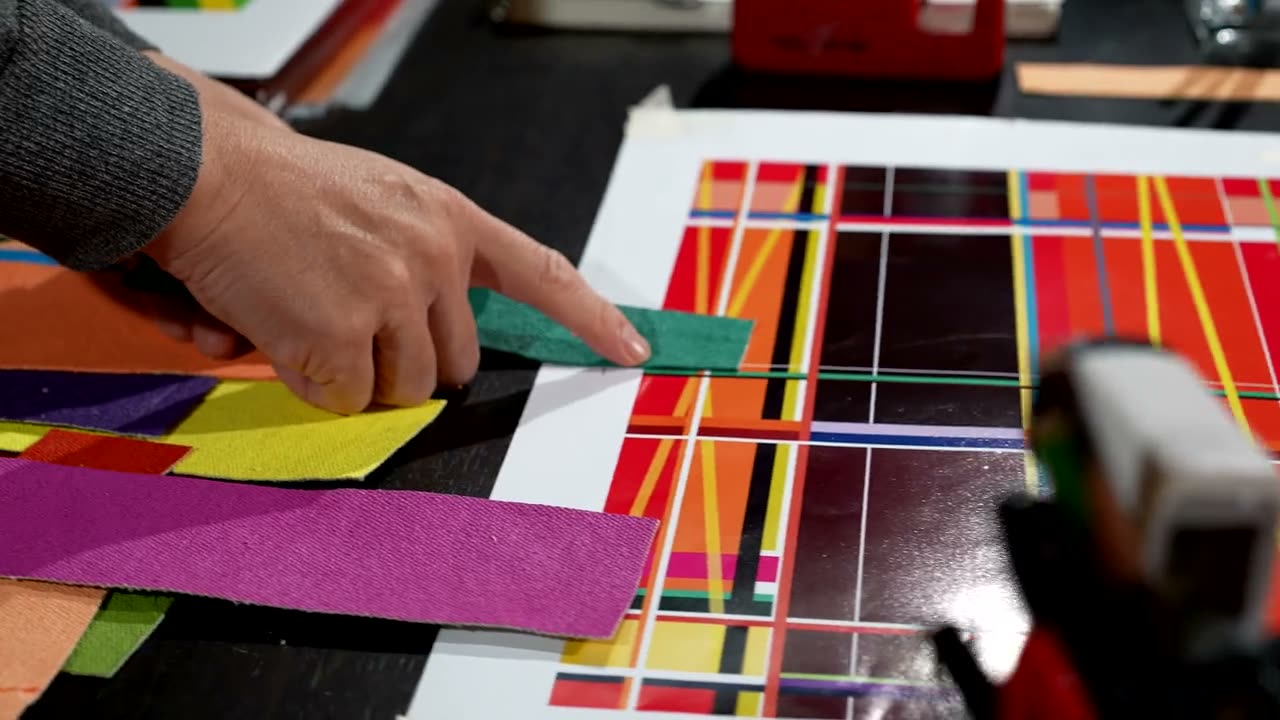
The method, at the distance it happens
Art documents badly. A finished piece reproduced on a screen is a flat rectangle, and it loses the scale, the surface and the labour, which is most of what a buyer or a gallery is responding to in the room. The way back is the making: film the decisions, and the finished piece at the end reads as a result rather than a picture.
The challenge
An artist's website is a grid of finished work, and a grid of finished work is the format in which every artist looks similar to every other artist.
What it cannot carry is the thing that separates them, which is method: how a composition gets resolved, how long it takes, and how many choices are inside one square metre.
None of that is visible in the object once it is finished. That is rather the point of finishing it.
How we approached it
Two threads, braided. The artist's own account of the method, and the method happening: the line laid, the tension pulled, the next colour chosen against the ones already down.
Neither carries the film alone. The account without the hands is a statement; the hands without the account are a craft video.
The finished pieces appear last, and by then the viewer has the vocabulary to read them.
the filmthe delivered cut
Three minutes forty-six.
The account and the hands, cut against each other.
Metrowire · 3:46 · sound on
the cutresult, person, method
Show the result, then earn it.
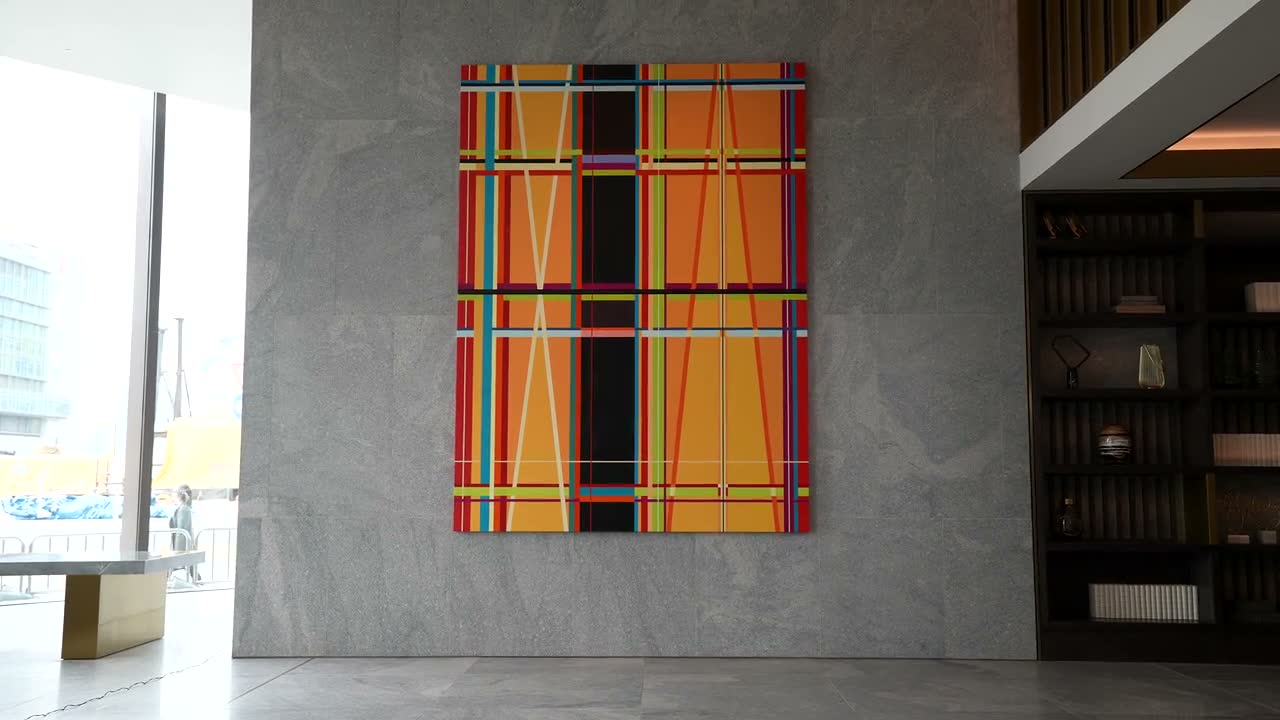
A profile that opens in the studio asks for patience. This one opens with the finished work and spends the rest explaining it.
beat 01
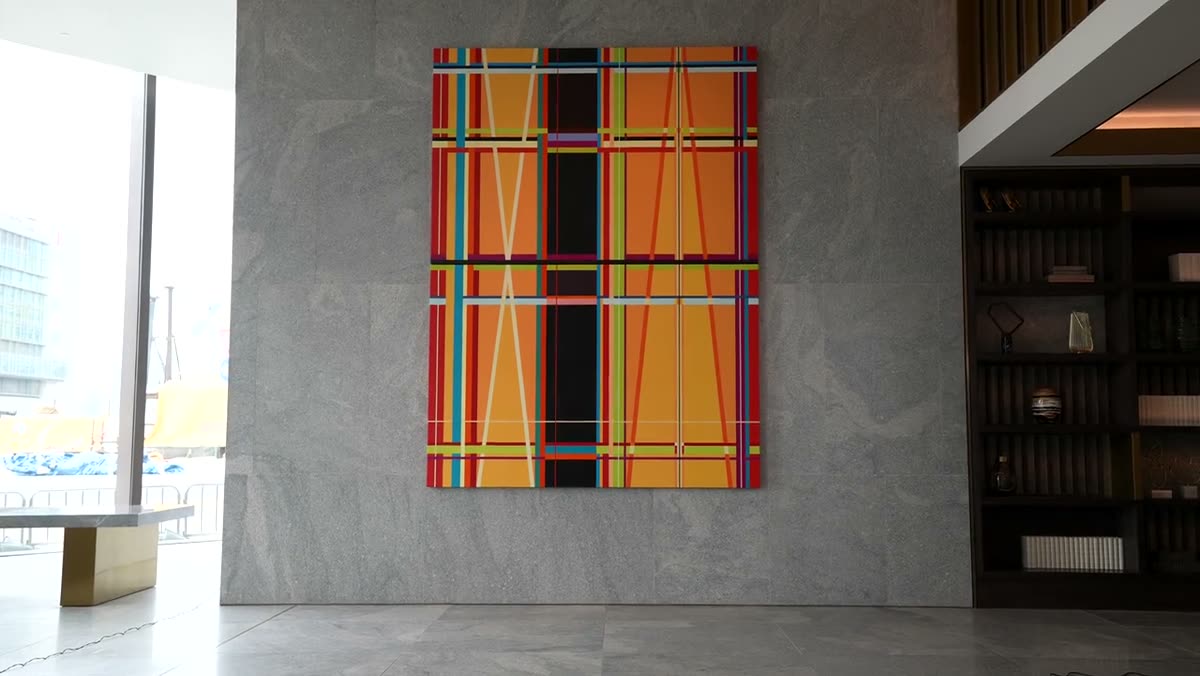
The finished work, in a room
Hung on concrete, in a real interior. The viewer is shown the outcome before being asked to care about the process.
beat 02
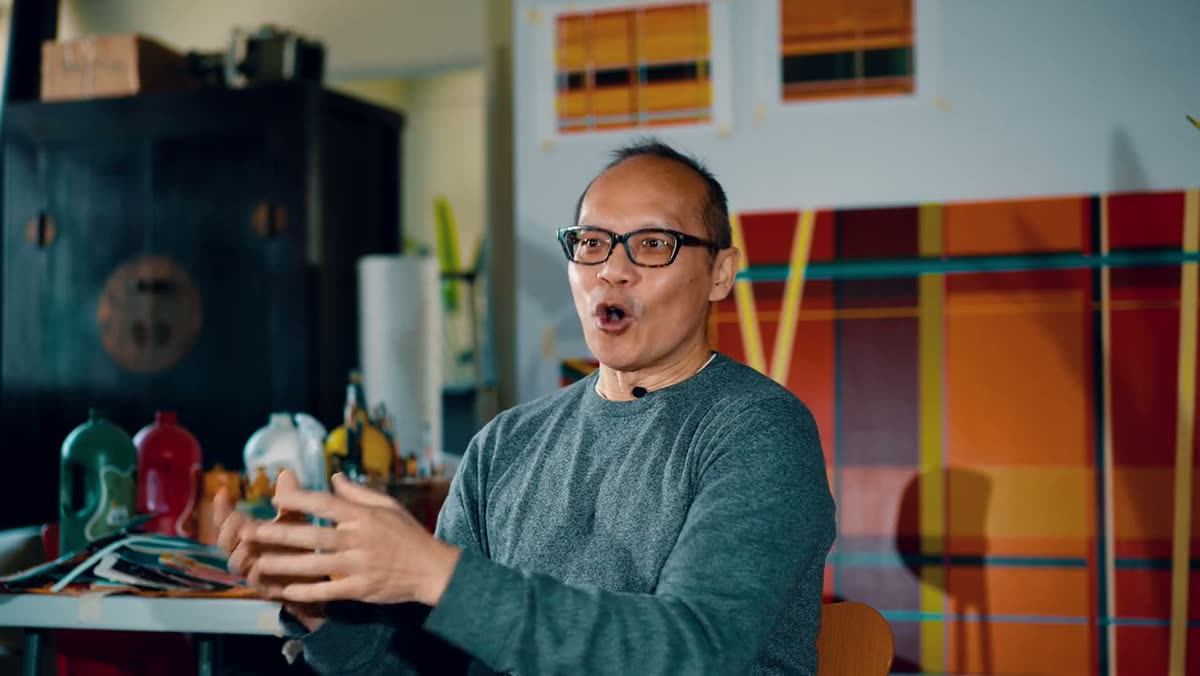
The person, in front of it
He speaks in the studio, with his own work behind him. Nothing is dressed: the background is the evidence.
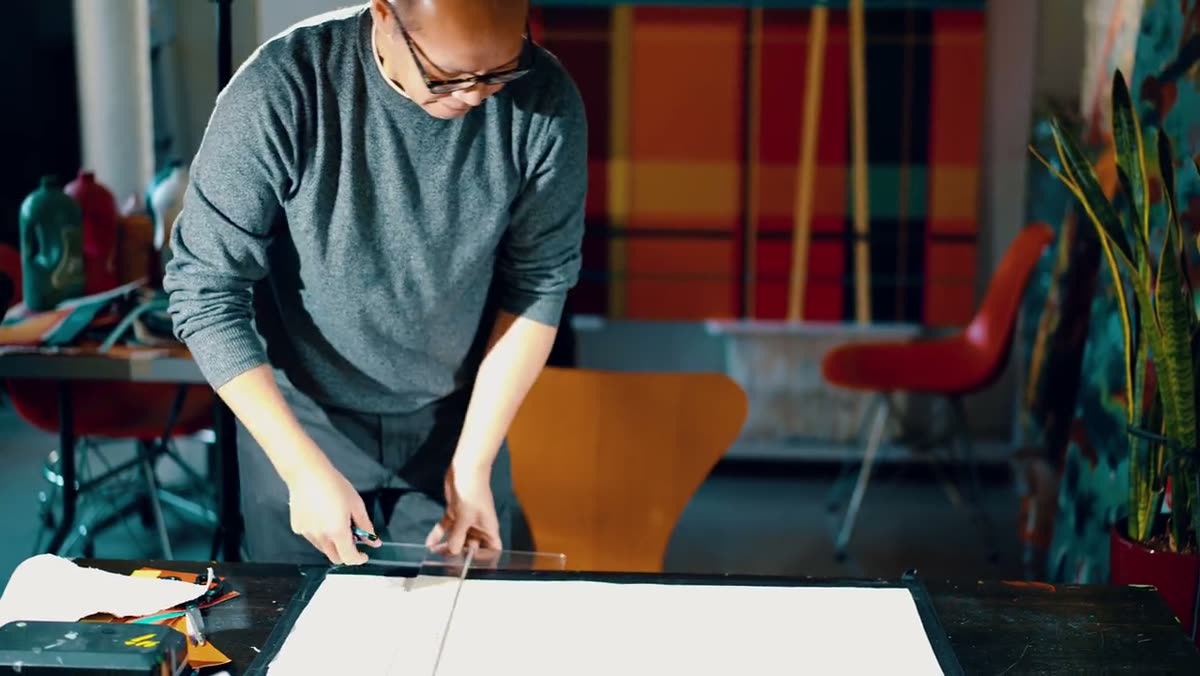
beat 03
Masking tape before colour
The method, and the answer to the obvious question. Every clean edge in the finished piece starts as a strip of tape laid by hand.
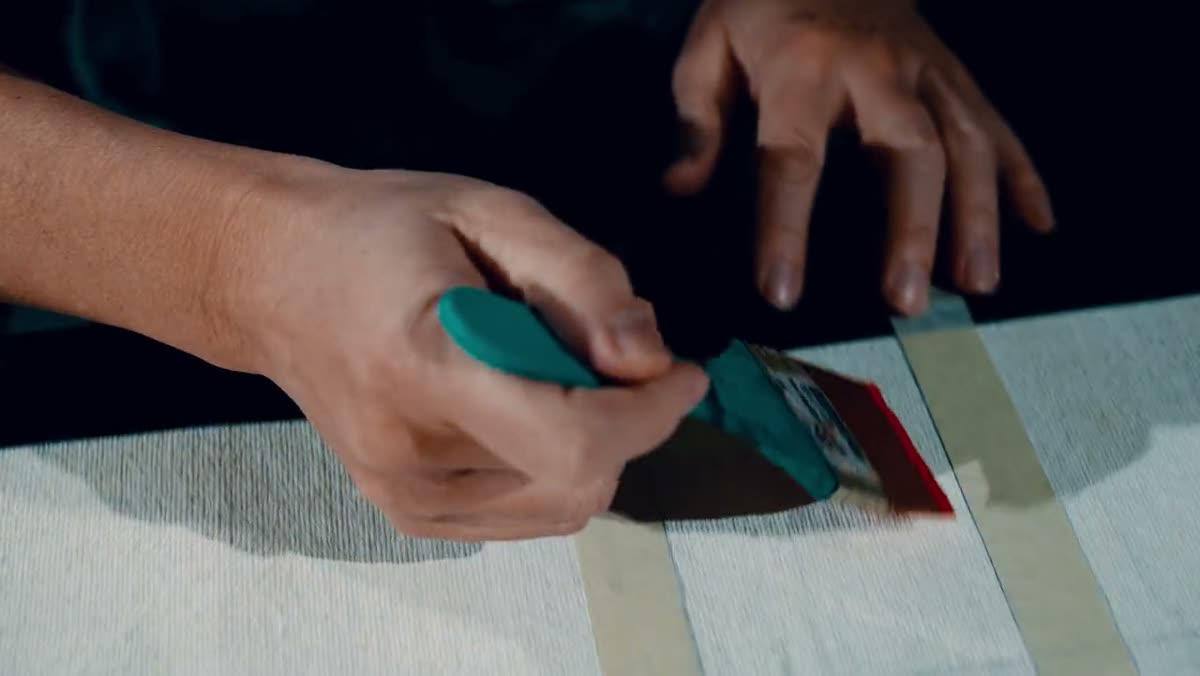
beat 04
The hand doing it
Close on the squeegee working the tape down. Craft films earn their claim at this distance.
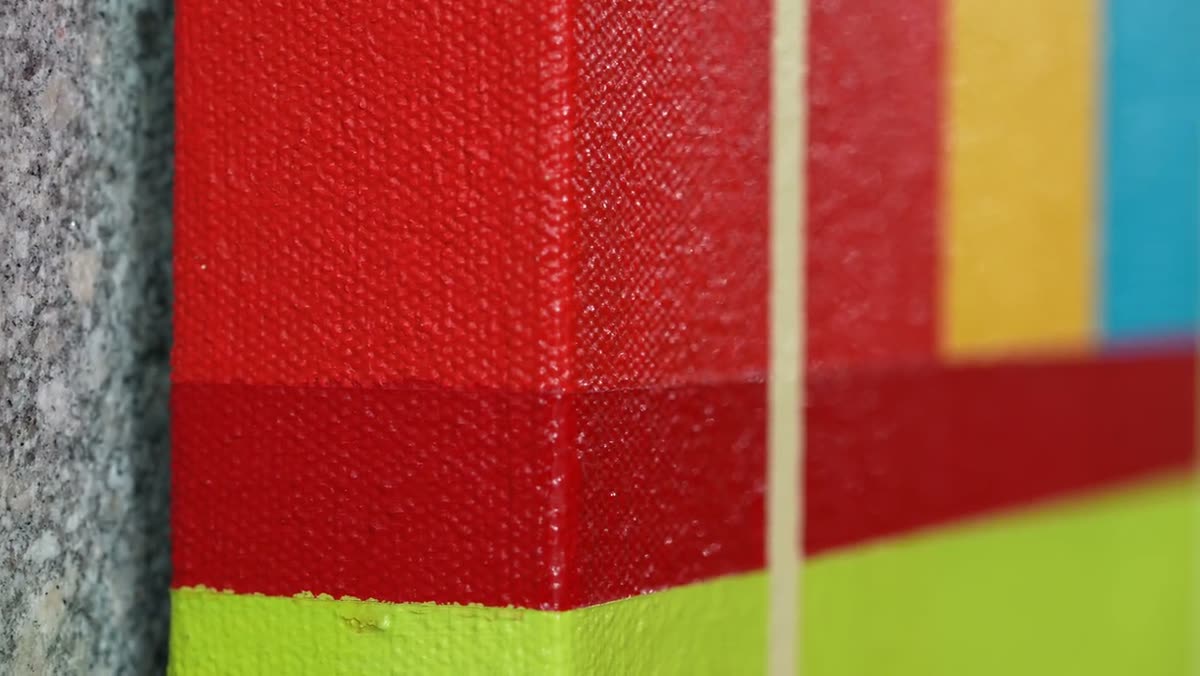
beat 05
The edge, magnified
Where two colours meet. This is what the taping bought, and it is only legible this close.
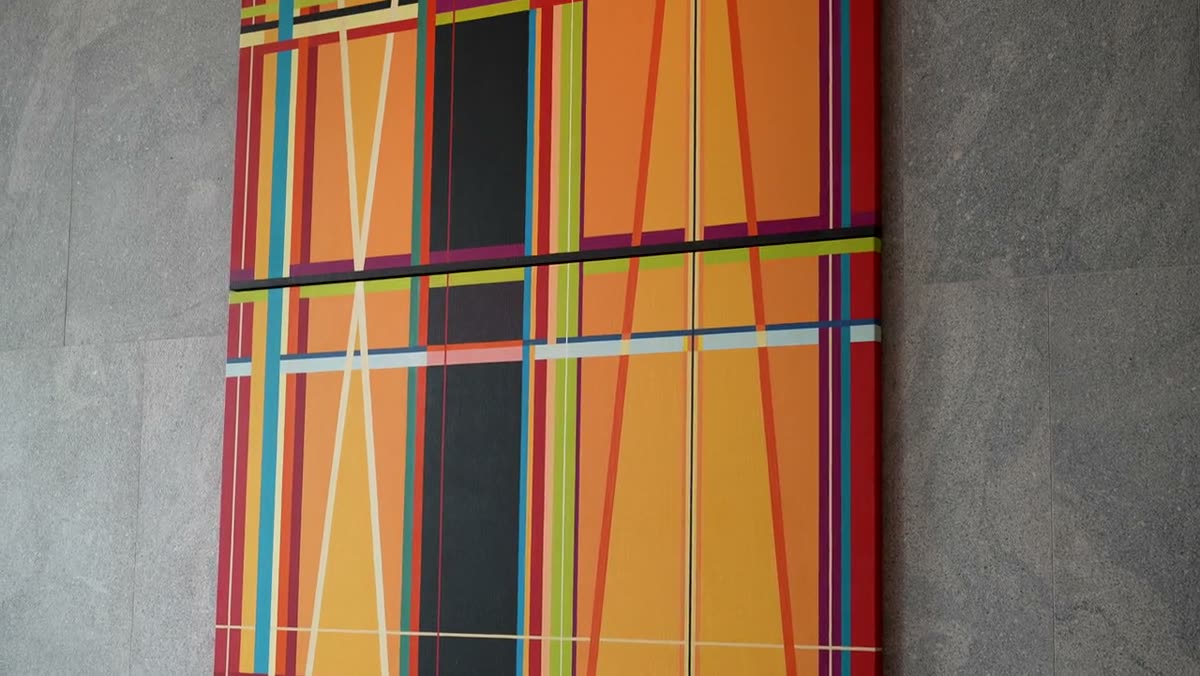
beat 06
Back to the wall
The finished piece again, now that the viewer knows what went into it. The same shot means something different at the end.
the lawwhat this one proves
For anything made by hand, the making is the argument.
A finished object is the end of a long series of decisions and shows none of them. Filming the process is not behind-the-scenes colour: it is the evidence for the price, and it is the only part a competitor cannot copy by hiring the same photographer.
Converted from Hong Kong dollars at indicative rates. Work is quoted and billed in HKD.
Work whose value is in how it was made.
Turnaround is agreed with you before work starts.
Or write to hello@enzwa.com