case studyfilm · star crossed tattoo
One continuous flight in off the street, then the craft at working distance.
Star Crossed asked for two things: the studio, and the craft. Healed work is the one thing a tattoo studio never lacks, and on a phone one grid of it looks much like the next. So the film flies in off the street instead, and stays on the floor while people work.
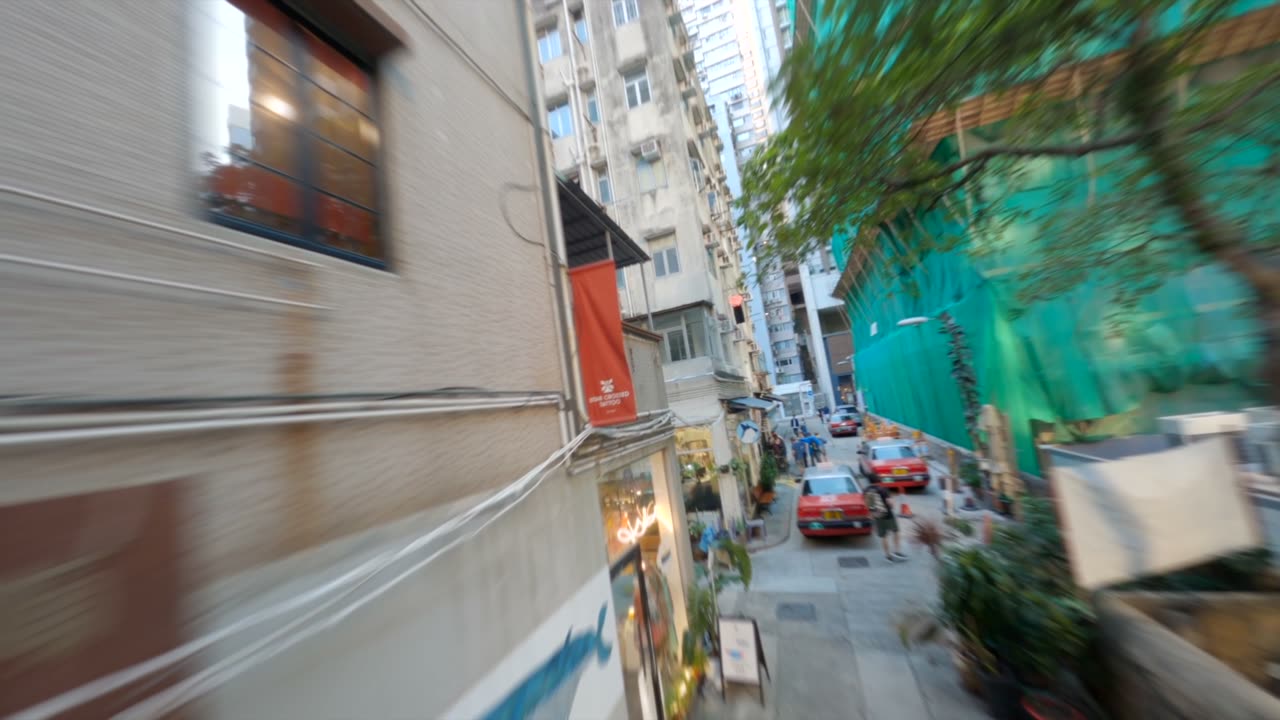
The approach: street to front door, one continuous move
A tattoo studio is judged before anyone walks in, on a phone, against every other studio's grid of healed work. Those pictures are all good and all the same shape, and none of them answer the two questions a first-time client actually has: what is the room like, and can I watch the hand that is going to do this. Both are questions about a place and a process, so we filmed a place and a process: one continuous flight from the street through the door, then the work at close range.
The challenge
Star Crossed wanted the studio shown, and the craft shown. Both are harder than they sound.
Finished work is the easy part and the crowded part: every studio has it, it photographs well, and it says nothing about who did it or where. It is a picture of an outcome, taken after everyone has gone home.
The room and the hand are what a client is actually deciding about, and they are exactly what a portfolio leaves out.
How we approached it
The room had to be entered, not toured. A cut of interior shots reads like a property listing, and a studio is not chosen on its floor plan.
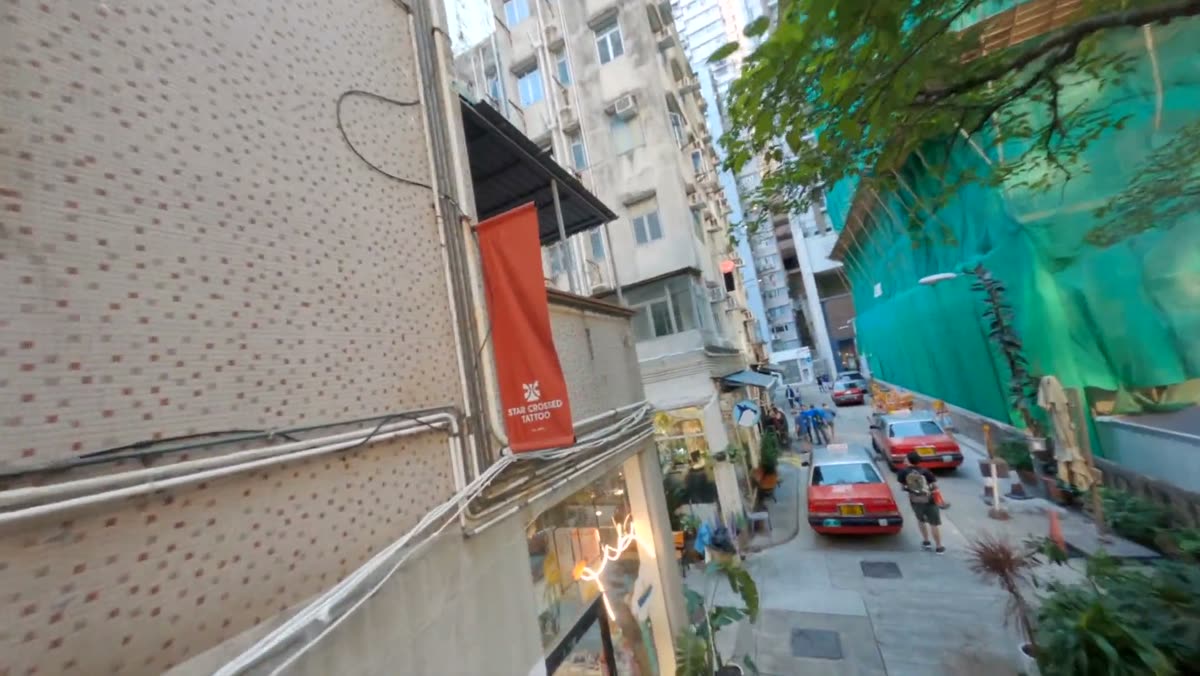
So the film arrives the way a person does. It comes in off a Hong Kong street, down the block, through the door and across the floor in one move, past the tables while people are working at them.
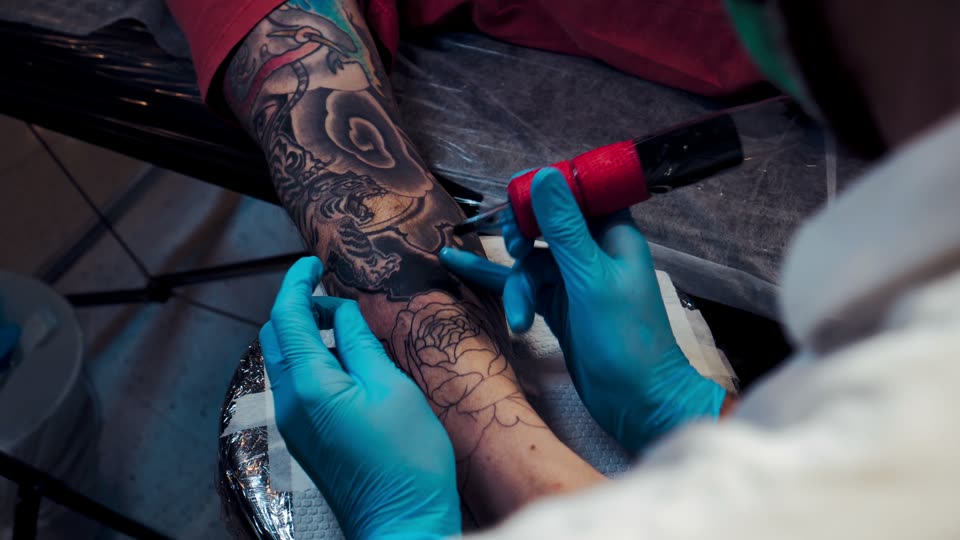
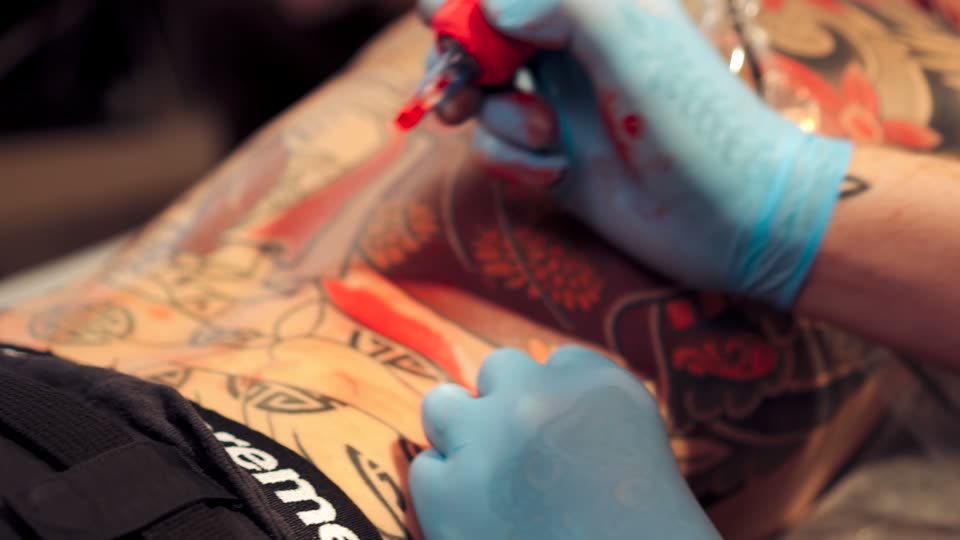
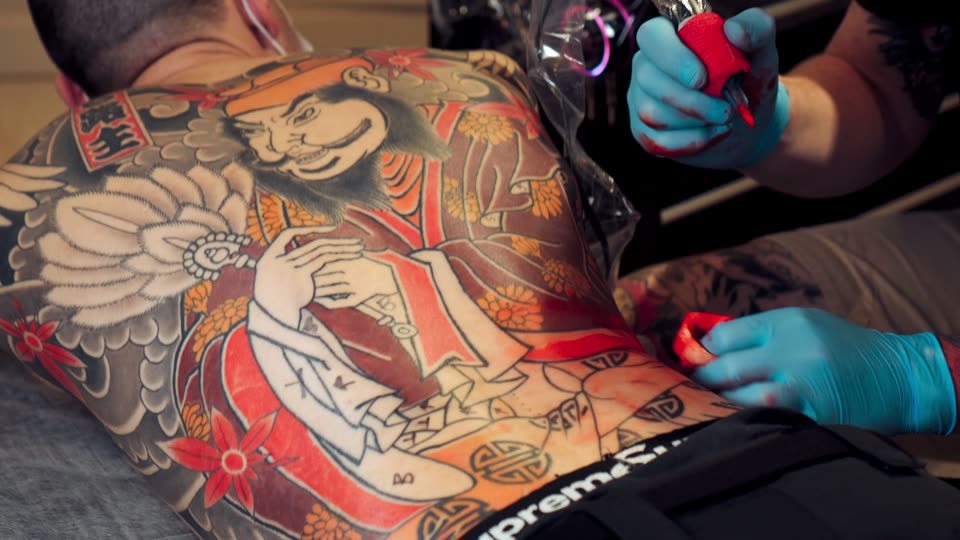
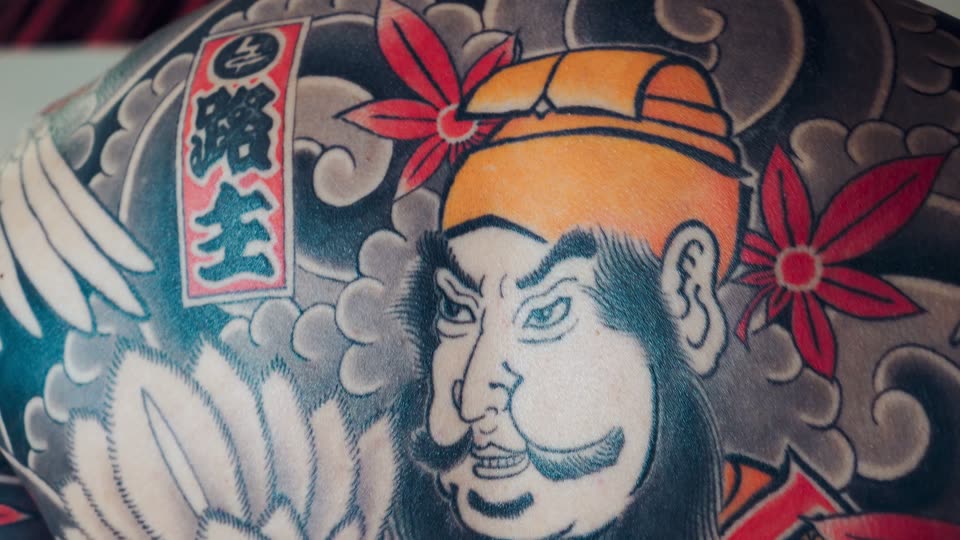
Then it stops moving. The middle of the film is the craft at working distance: an outline going on, colour going in, a back piece part-finished. Close enough to see the needle, held long enough to see the hand is steady. It leaves the way it came.
the filmthe delivered cut
Two minutes four, door to door.
In off the street, around the floor, close on the work, and back out over the rooftops.
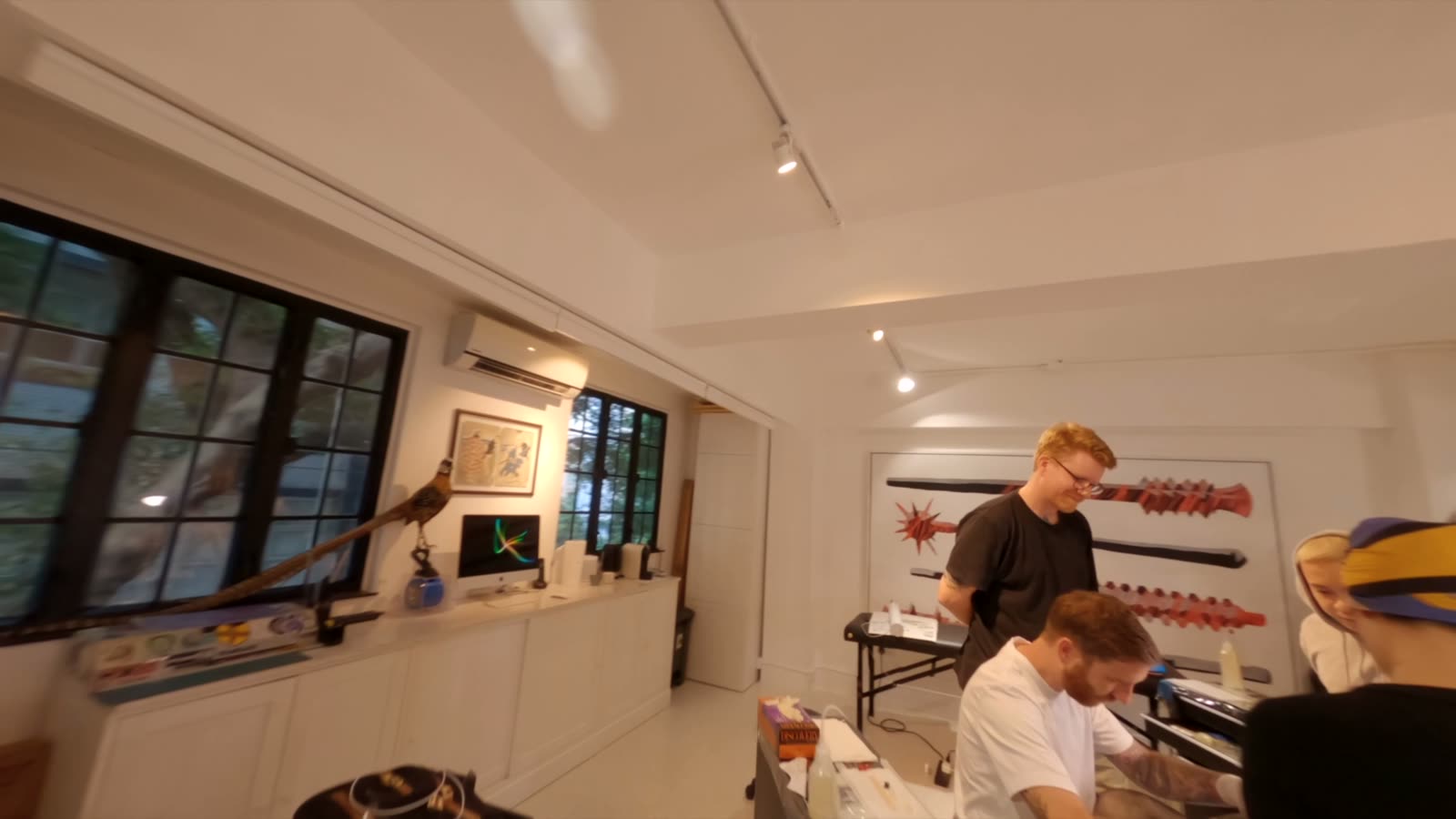
Star Crossed Tattoo · 2:04 · sound on
the craftat working distance
Close enough to see the needle.
Four moments from the middle of the film, where it stops flying and watches the work instead.
the artistone session, start to finish
One artist, one session, at working distance.
The design drawn on the tablet, the stencil, the machine, and a Japanese sleeve going in over an hour compressed to a minute. It runs silently as you reach it: the craft is the argument, and it does not need a voiceover to make it.
Silent by design · 1:00
the cutone flight in, then the work
Arrive, then close the distance.
The film changes distance rather than location. After the flight it never leaves the room.
beat 01
One continuous flight in
Off a Hong Kong street, past the banner, through the door. No establishing montage: the viewer arrives.
beat 02
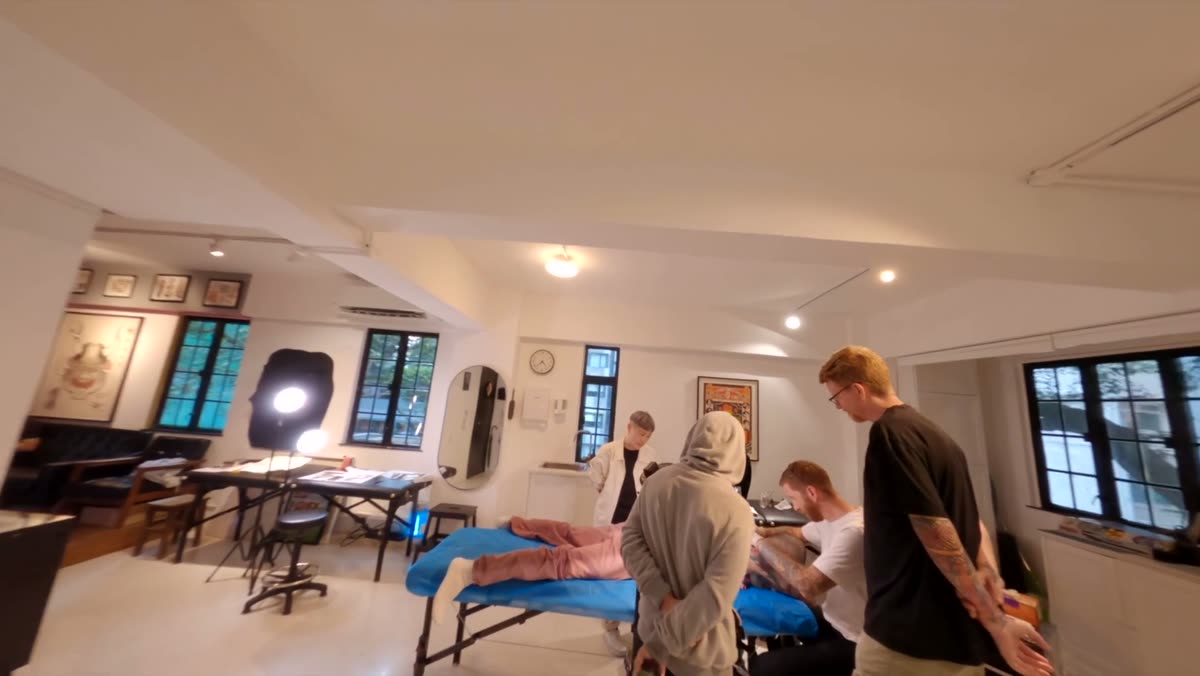
The room, whole
The drone settles and every station is occupied. One shot answers how big the studio is and how busy it is.
beat 03
Down to the tool
Machine and ink, close and shallow. The cut moves in rather than across.
beat 04
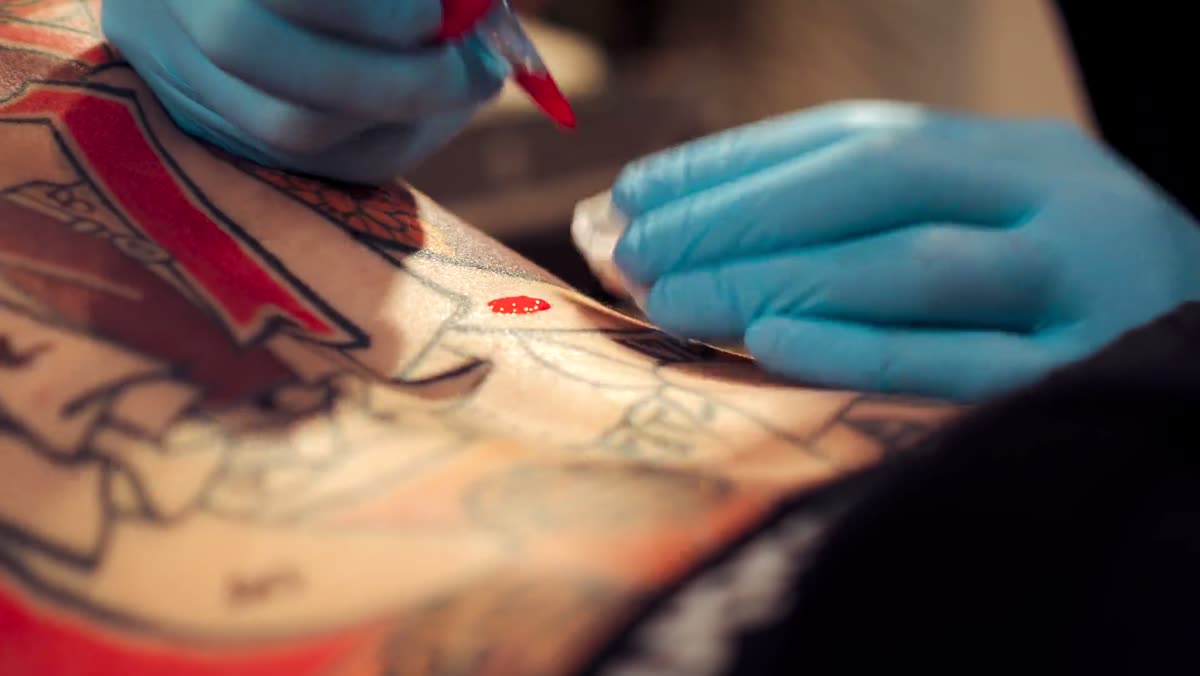
Ink going in
Gloved hands working colour into a back piece. Filmed close enough to be slightly uncomfortable, which is honest about the process.
beat 05
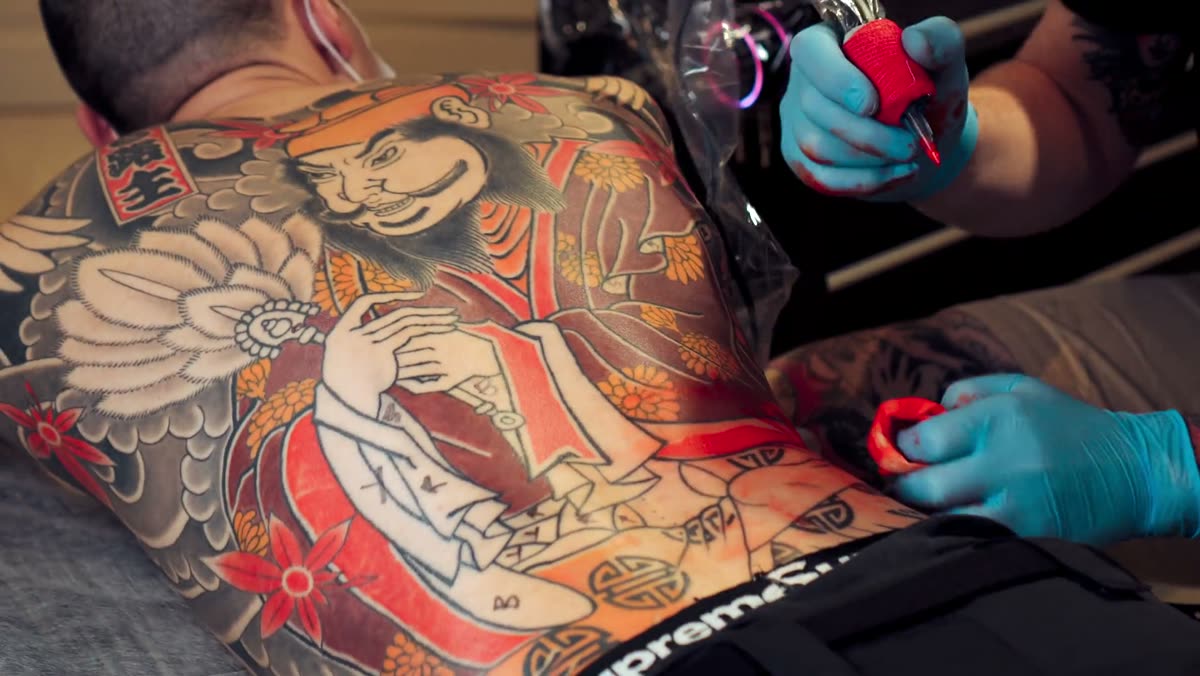
The scale of it
A full Japanese back piece in one frame. The commitment is the subject and it needs to be seen whole.
beat 06
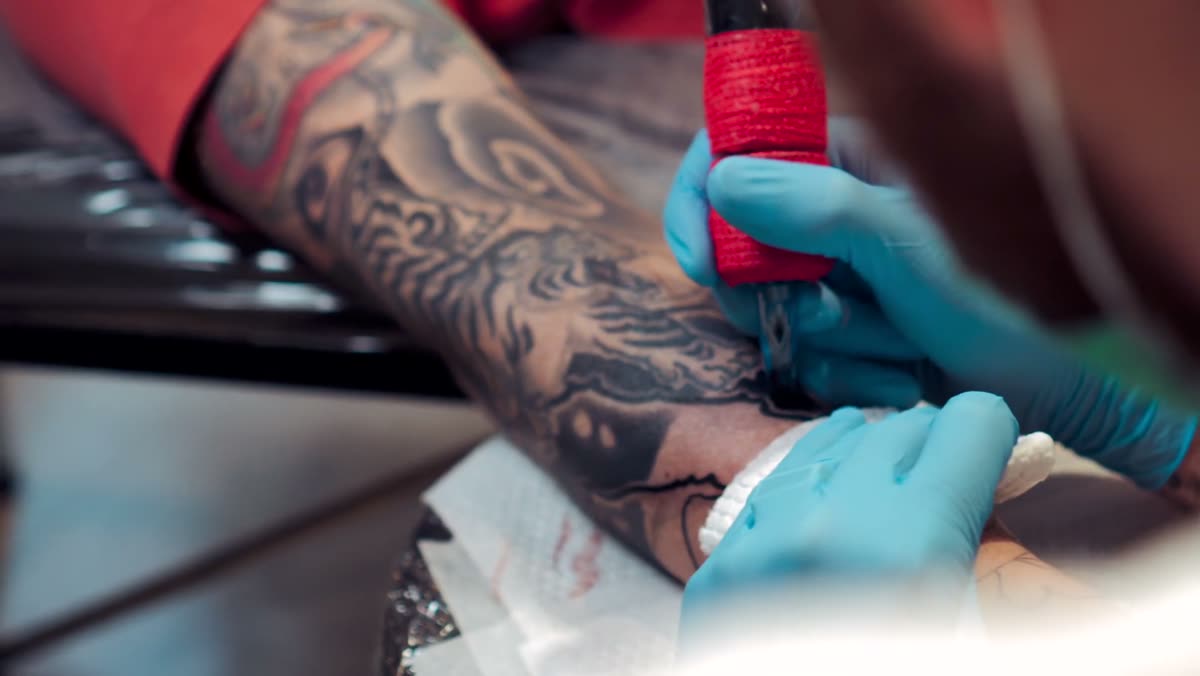
The unglamorous half
Wipe, check, continue. Studios sell the finished photograph; the work is mostly this.
the lawwhat this one proves
A place is sold by arriving at it.
Interiors photographed well are still interiors, and the viewer stays outside them. One continuous move from the street through the door does the thing a cut sequence cannot: it puts somebody in the room before they have decided to be interested. It is the same reason we fly factories rather than photograph them.
Converted from Hong Kong dollars at indicative rates. Work is quoted and billed in HKD.
A room worth walking into, and the work that happens in it.
Turnaround is agreed with you before work starts.
Or write to hello@enzwa.com